Case study
BASF and IMA Active. A comparison of three coating processes.
-
Reading time 7 min
-
A study by

-
In collaboration with

Use of different coating technologies to apply a functional film-coating polymer onto drug layered pellets.
Introduction
One has to consider various aspects when deciding on a coating technology. Process efficiency, content uniformity of the applied coat, and economical aspects are features of utmost importance, yet vary depending on the type of coating employed. Especially within the realm of functional coating and/or drug layering, this question is of serious importance. The aim of this study was to compare three different coating technologies efficiency in a pellet coating process.
Materials
Pellets (20 – 25 mesh, IPS) consisting of sucrose and microcrystalline cellulose were used as substrate. As tracer, Riboflavin (BASF) embedded in a film of poly(vinyl alcohol)-poly(ethylene glycol) graft copolymer (Kollicoat® IR, BASF), ratio 1:2, was applied as aqueous formulation with a solid matter content of 15%.
The functional coat was based on poly(methyl methacrylate-co-(2-diethylaminoethyl) methacrylate) copolymer (Kollicoat® Smartseal 30 D, BASF). Further components of the formulation (Table 1) were: FD&C Blue No. 1 (BASF), acetyl tributyl citrate (ATBC, Jungbunzlauer), buthylene hydroxy toluene (BHT, Lanxess), docusate sodium (DS, Cytec), and talc (Merck). The solid matter content of the formulated Kollicoat® Smartseal dispersion was 20%.
| Table 1: coating formulation for the functional coat. | ||
| Ingredient | Content | Polymare based |
| Kollicoat* Smartseal 30D | 50.5% | – |
| Acetyl tributyl citrate (ATBC) | 7.6% | 15.0% |
| Buthylene hydroxy toluene (BHT) | 1.3% | 2.5% |
| Docusate sodium (DS) | 1.0% | 2.0% |
| Talc | 39.0% | – |
| FD & C Blue No. 1 | 1.0% | – |
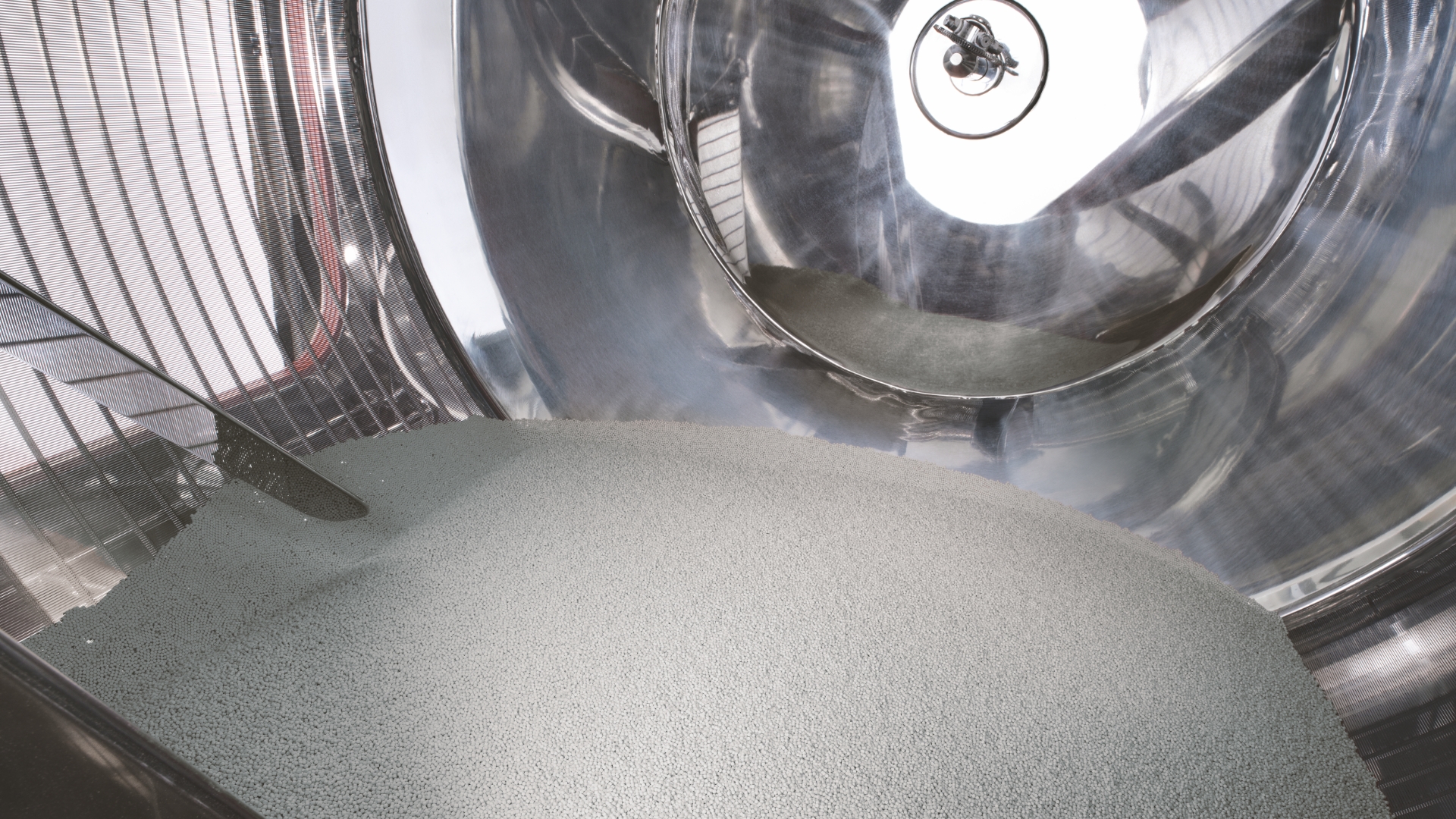
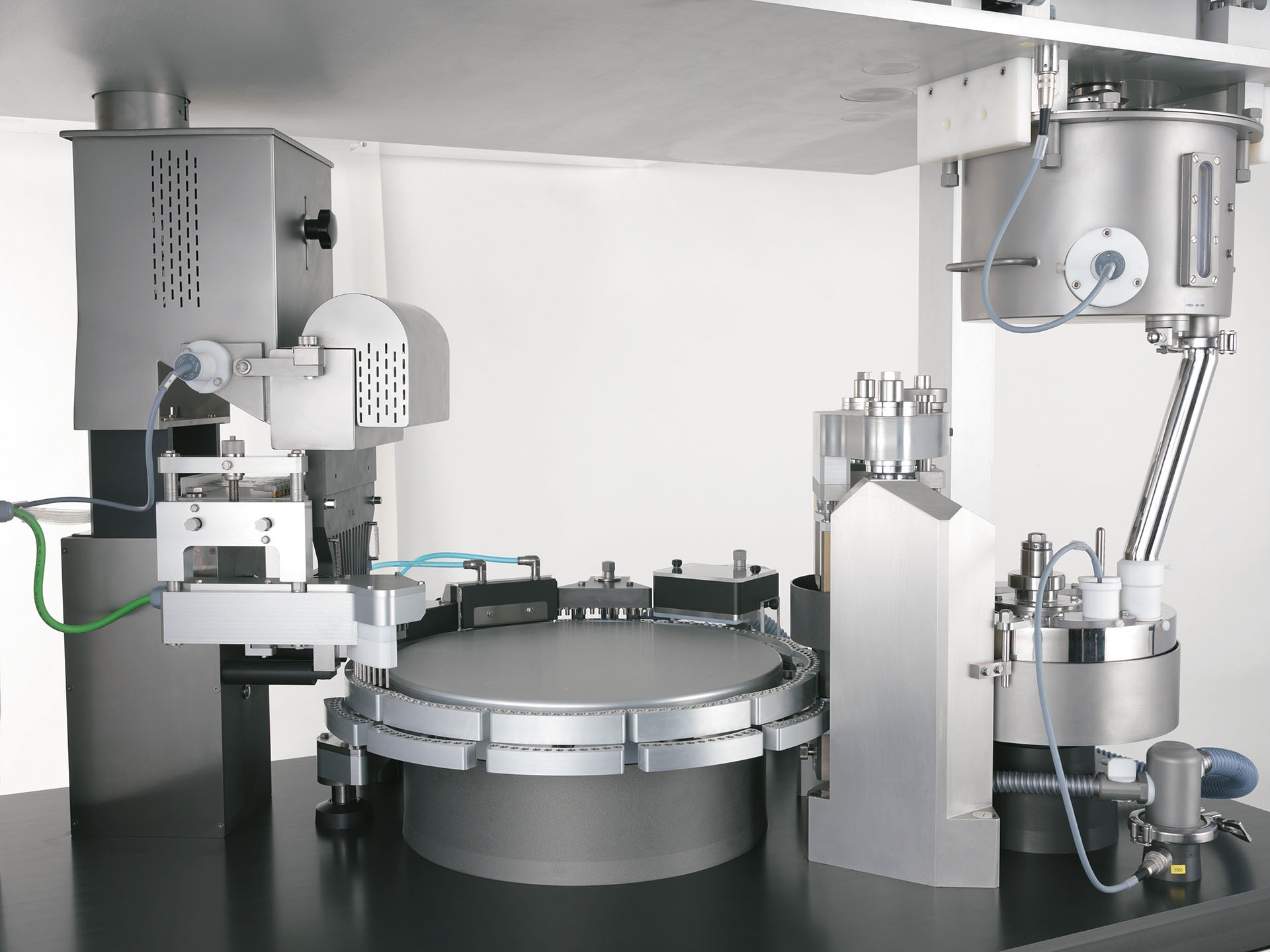
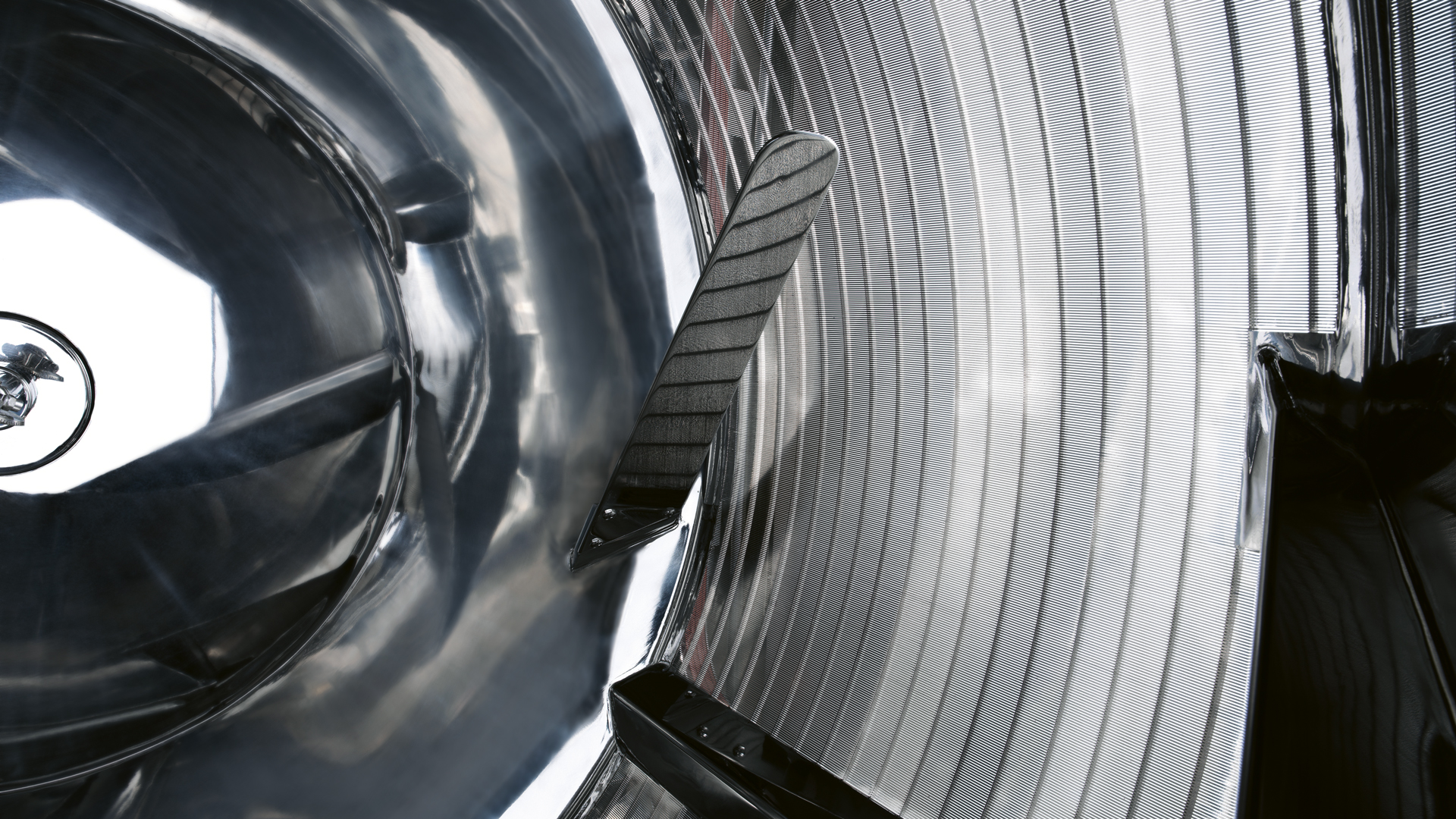
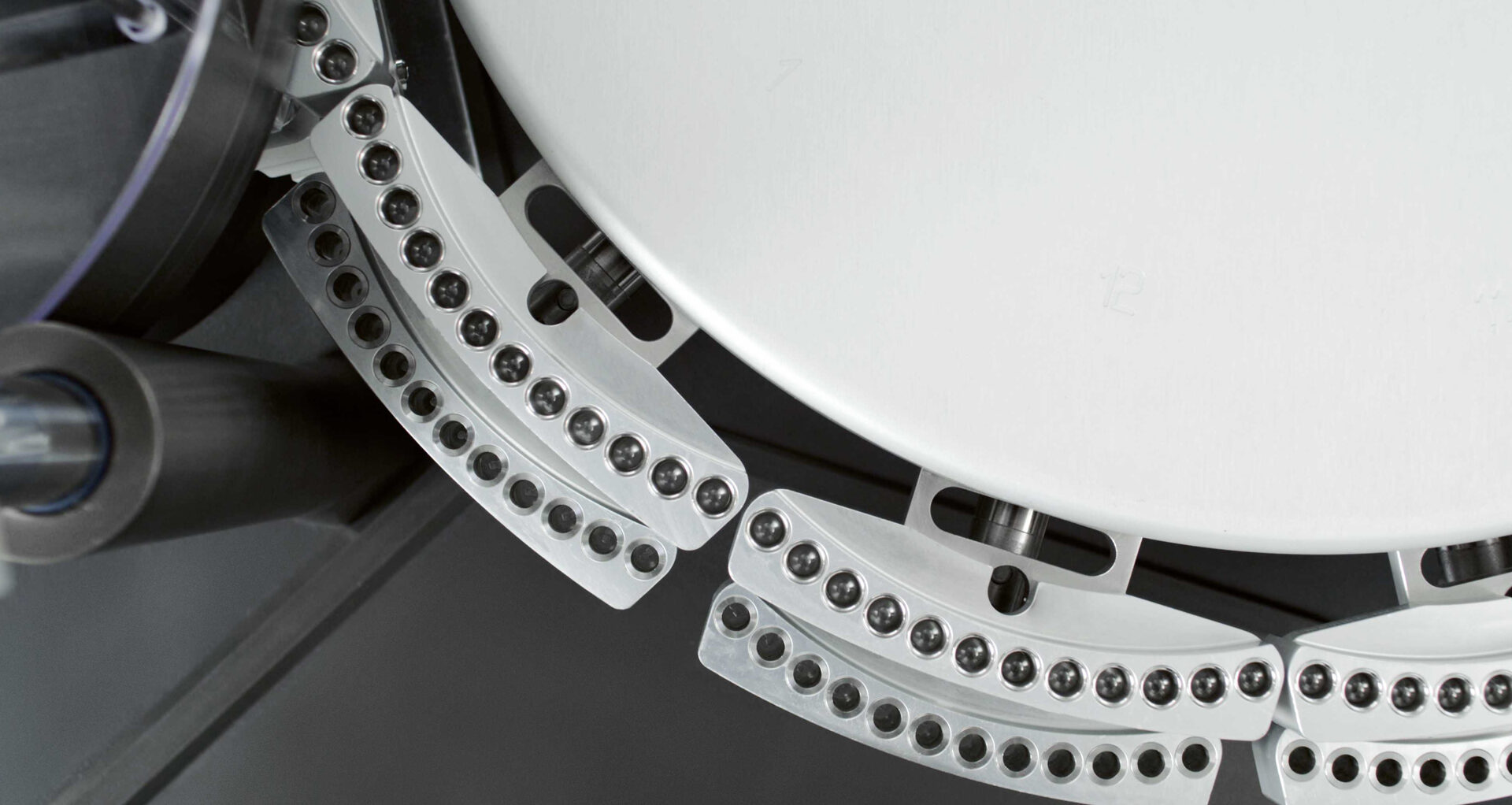
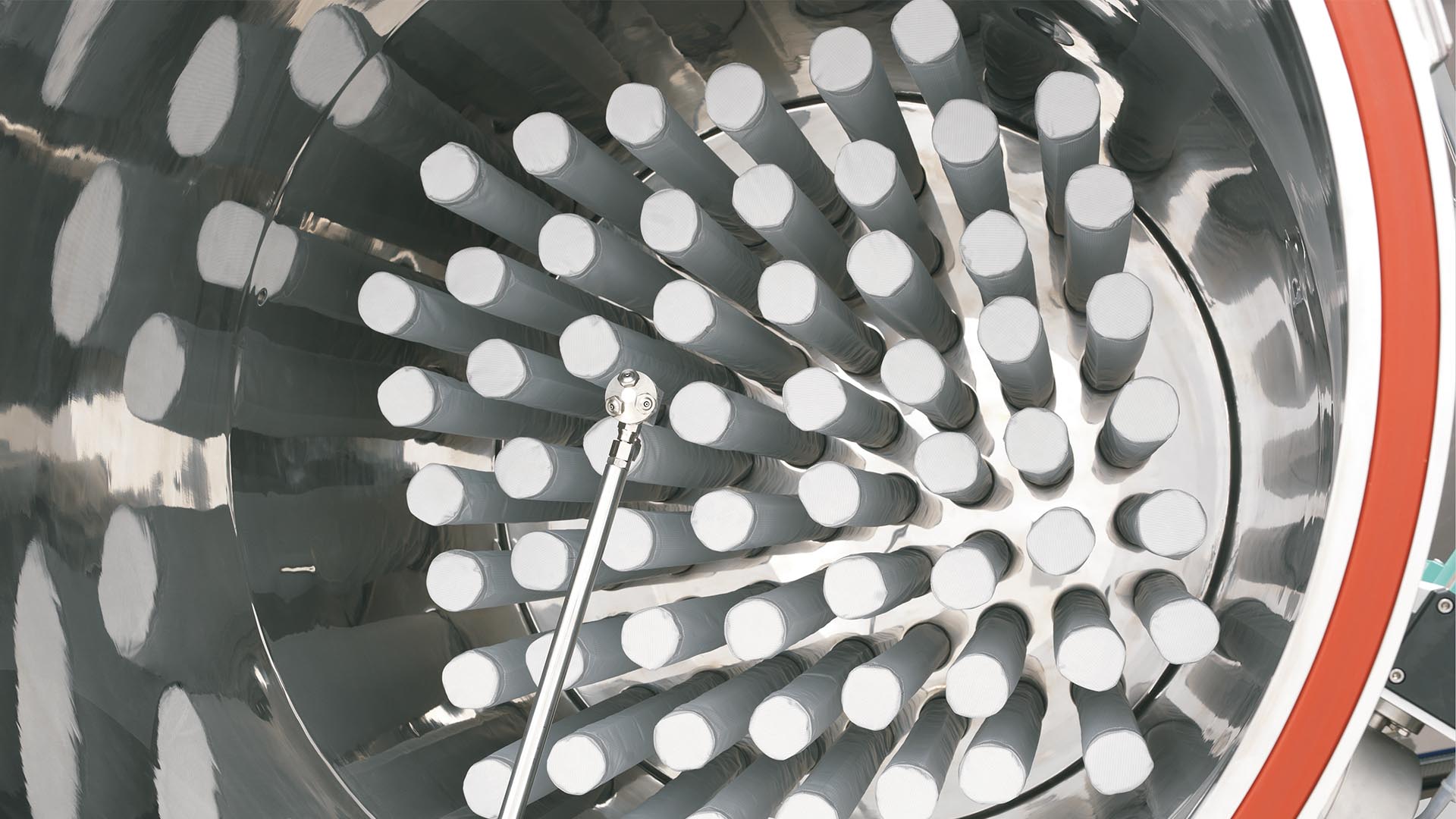
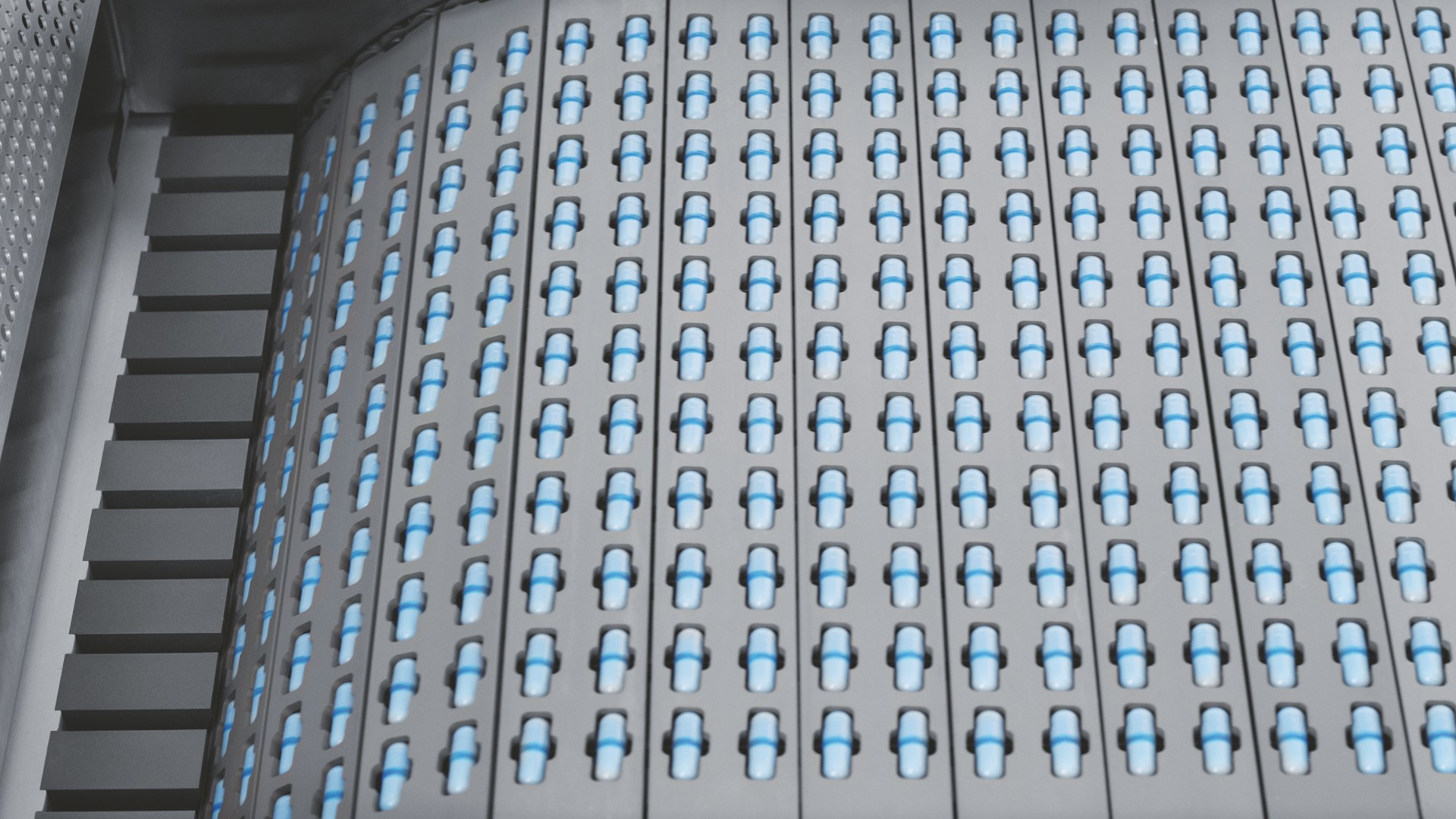
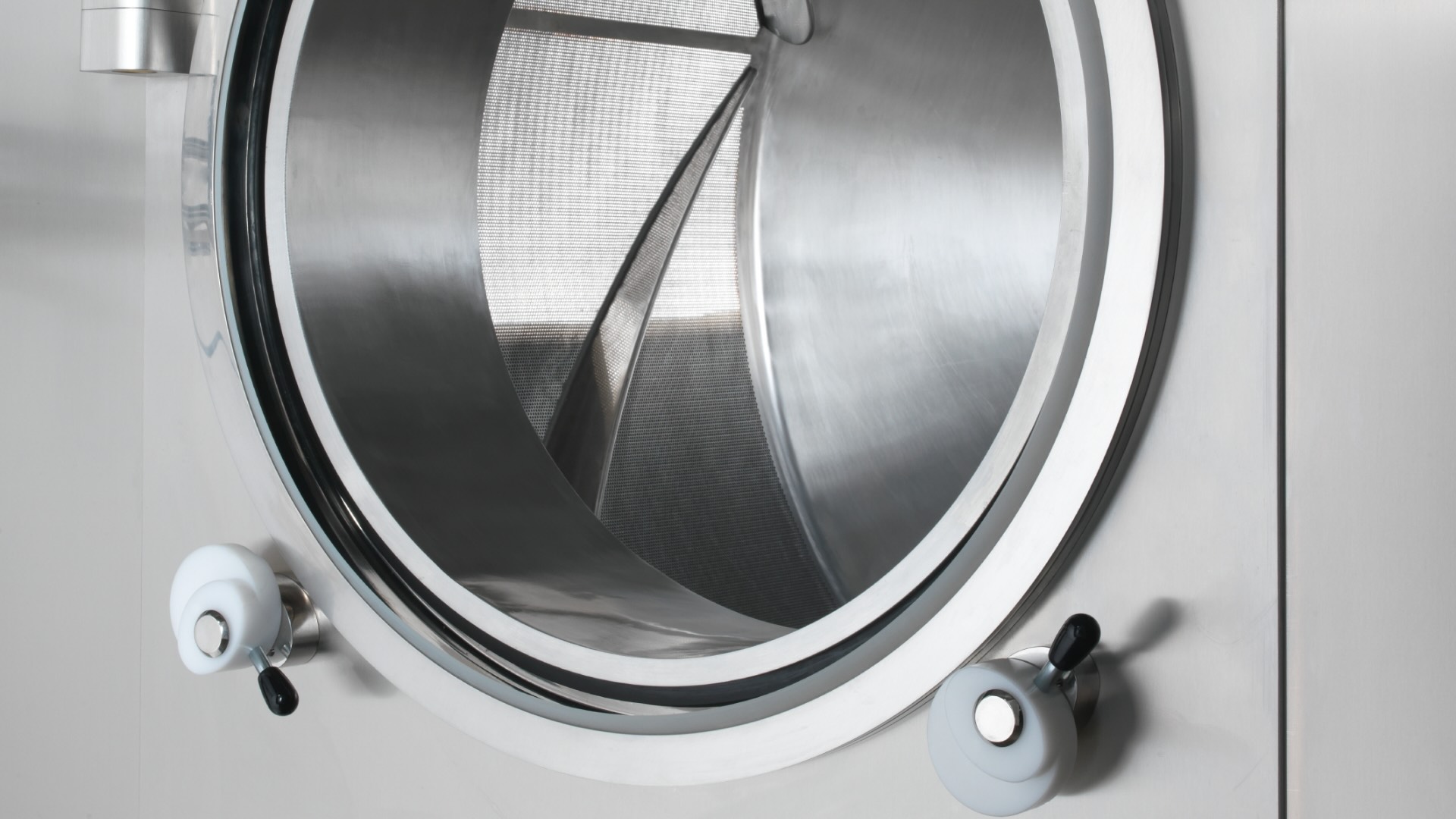
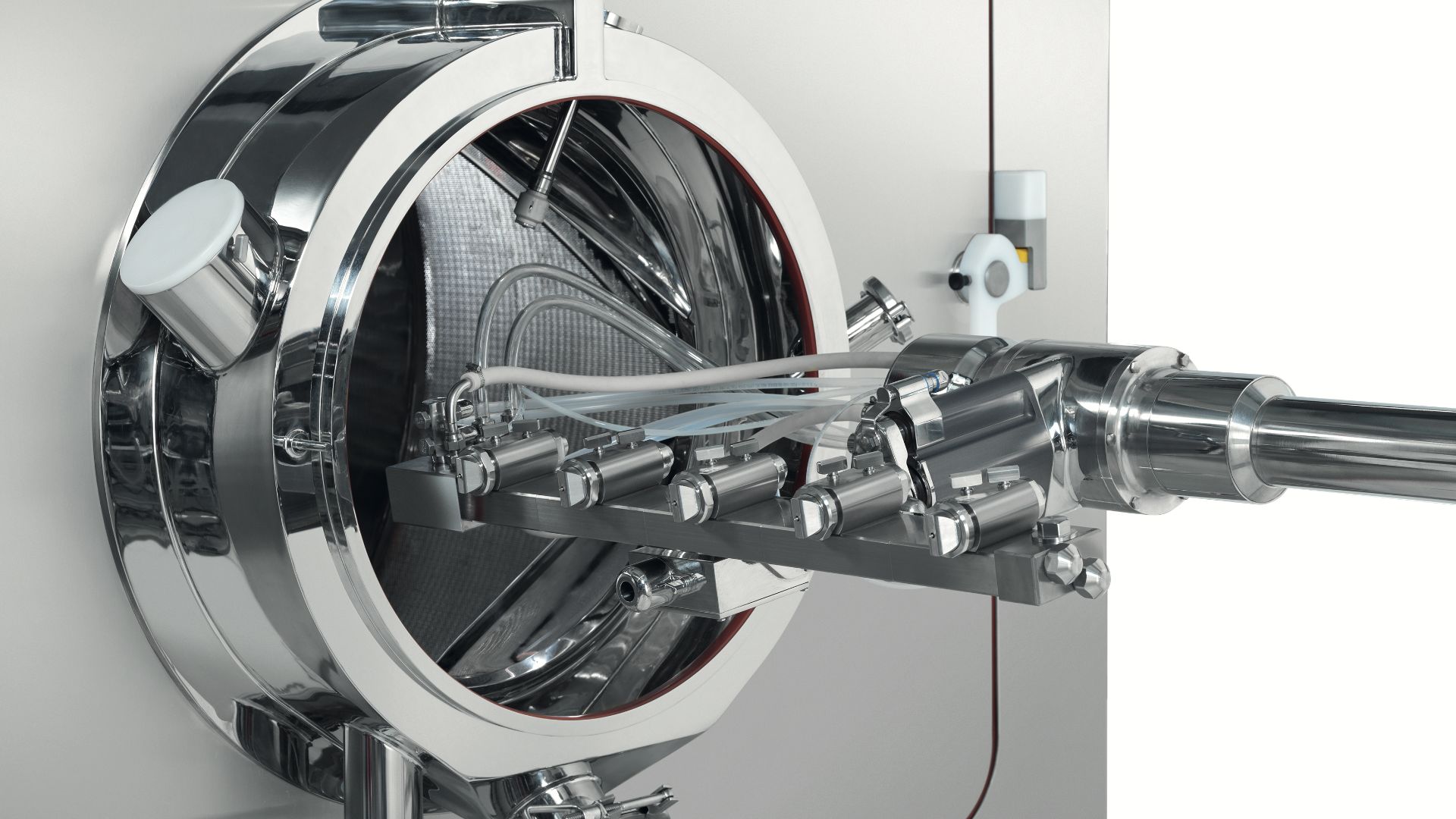
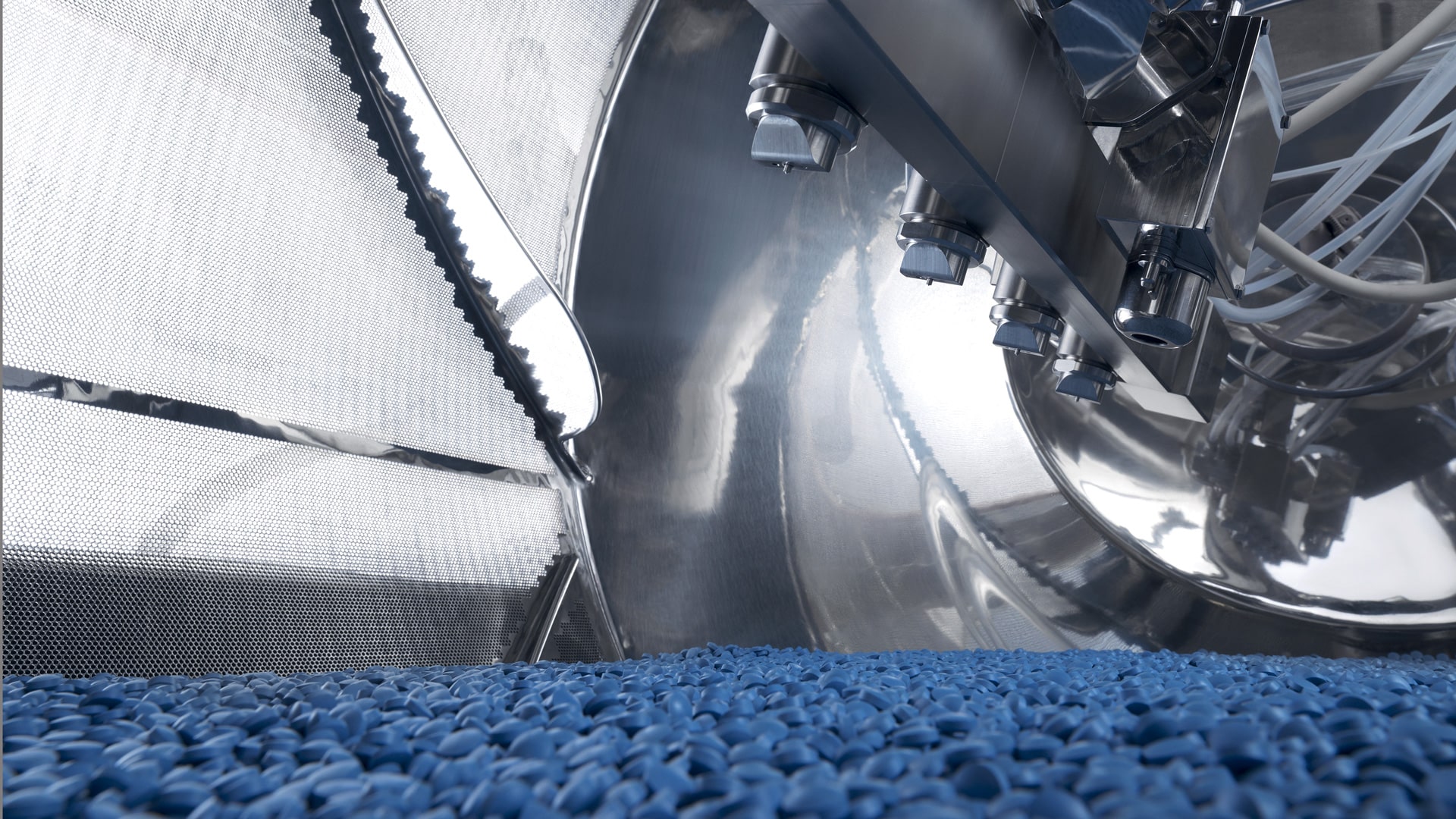
Three different coating technologies were used in this study: a fluid bed coater (FBC) MYLAB, with bottom spray configuration, a solid wall drum coater (SWC) GS HP 25, and a side vented pan coater (SVP) PERFIMA LAB, with wedge wire screen drum. The latter drum has been specifically designed for coating of small substrates such as pellets. Small wedge wires are fitted into the drum wall to allow the passage of process air.
The drum maintained the same drum shape, mixing baffles and spray system as the standard equipment for tablet coating. All machines were provided by IMA Active division (Bologna). The coating trials were performed according to schema listed in Table 2.
| Table 2: parameter set for different processes. | ||||
| Parameter | m.u. | Fluid bed coater (FBC) | Solid wall coater (SWC) | Side vented pan coater (SVP) |
| Batch size | kg | 2.5 | 25 | 25 |
| Batch volume | L | 3.0 | 30 | 30 |
| Inler air temperature | °C | 55-68 | 65-70 | 75-80 |
| Air quantity | m3/h | 140-170 | 500 | 600 |
| Orifice diameter | mm | 1.2 | 1.2 | 1.2 |
| Spray rate | ml/min | 25 | 25-30 | 50-70 |
| Atomisation air pressure | bar | 1.2 | 1.2 | 1.2 |
To allow a distinct investigation on the coating level, the individual amount of applied coat was determined by photometrical measuring of either Riboflavin or the colorant FD&C Blue No 1.
For dissolution testing, a standard USP Dissolution Apparatus 2 (Paddle) from ERWEKA, equipped with continuous on-line UV measuring (Agilent 8453), was used. Since taste-masking functionality is to be delivered in the oral cavity, phosphate buffer (pH 6.8) was used as dissolution media (700 ml±1%, 37°C±0.5 K, n=13).
Result and discussion
Firstly, Riboflavin was coated onto the pellets as a tracer for the later performance testing of the functional coat (dissolution). In all three coaters, the same coating formulation with the same solid matter content was sprayed onto the pellets for five hours, using optimised settings for each individual technology.
The achieved weight gain revealed an excellent performance of the fluid bed coater. However, employing standard deviation as a scale for content uniformity, the solid wall coater presented best results (Table 3).
| Table 3: comparison of the free processes regarding of wait gain and standard deviation. | ||
| Coater | Weight gain | Standard deviation |
| Fluid bed coater (FBC) | 6.02% | 3.62% |
| Solid wall coater (SWV) | 3.38% | 2.43% |
| Side vented pan coater (SCP) | 4.84% | 3.87% |
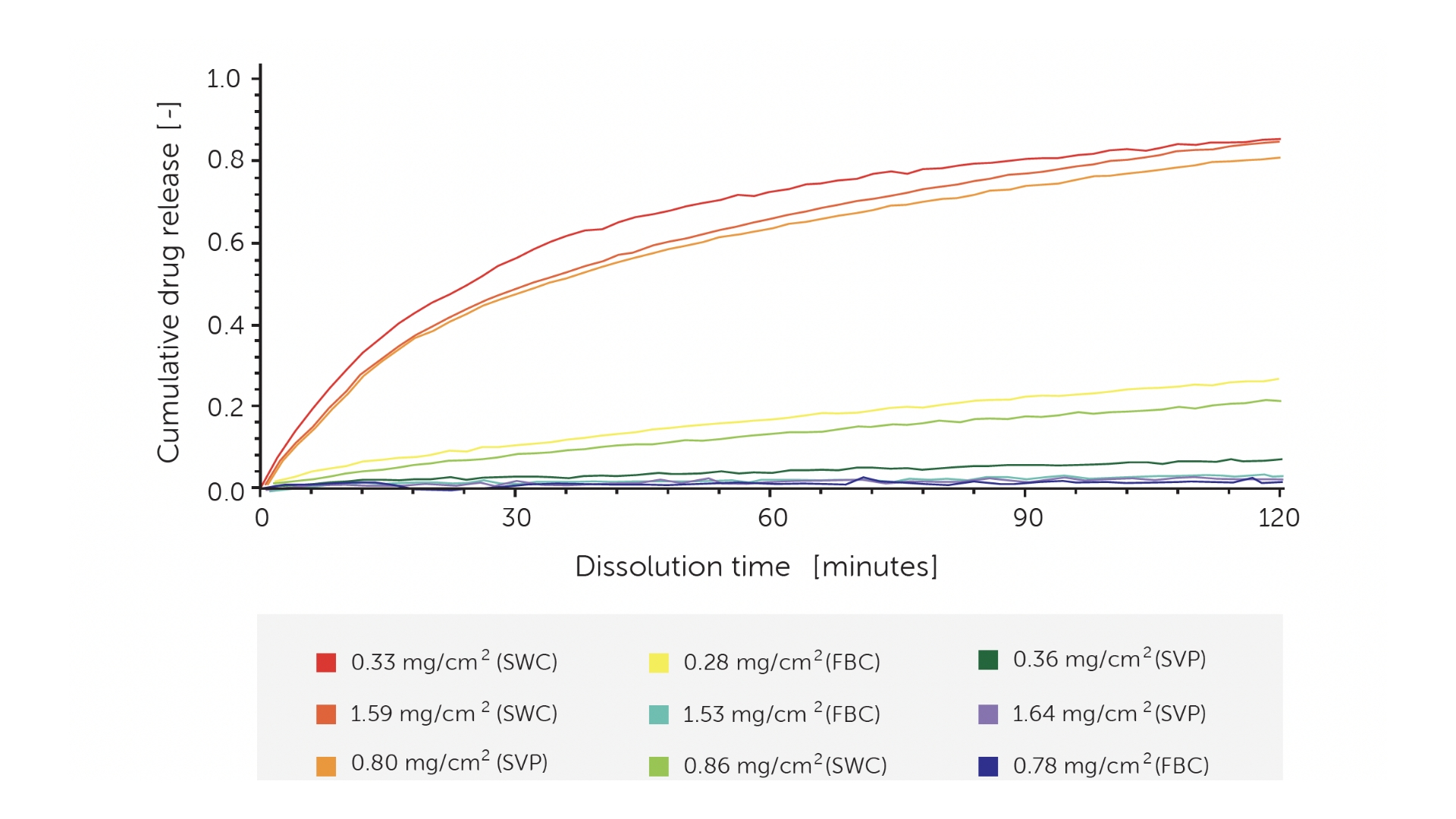
Typically, the coating formulation based on Kollicoat® Smartseal needs to be applied with a coating level of 3.5 mg/cm2 onto tablets to gain functionality. When applying the same coating formulation, onto pellets, full functionality could be achieved with distinctively lower coating levels in all coaters.
The reason was, most likely, the absence of the critical edge between band and cap, which every tablet bears inherently. Pellets with their spherical shape do not offer such crucial areas.
Pellets, which passed through a fluid bed coating process experienced hardly any mechanical stress.
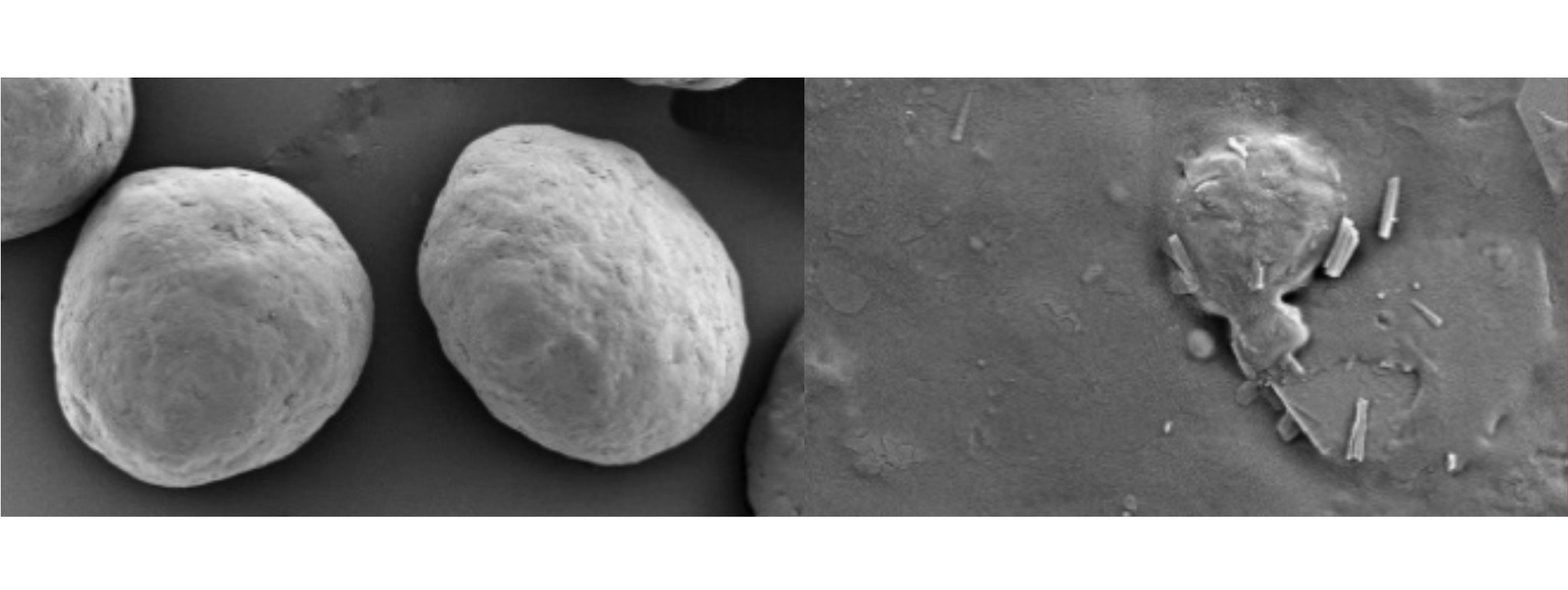
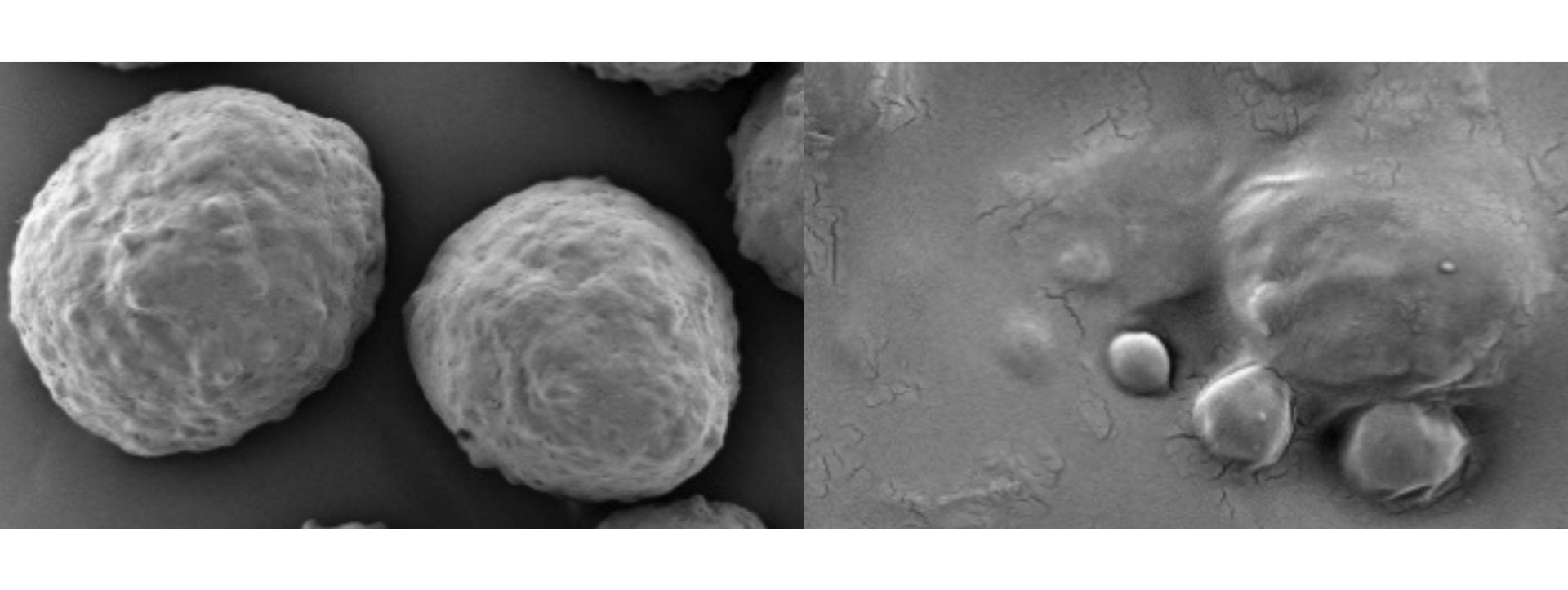
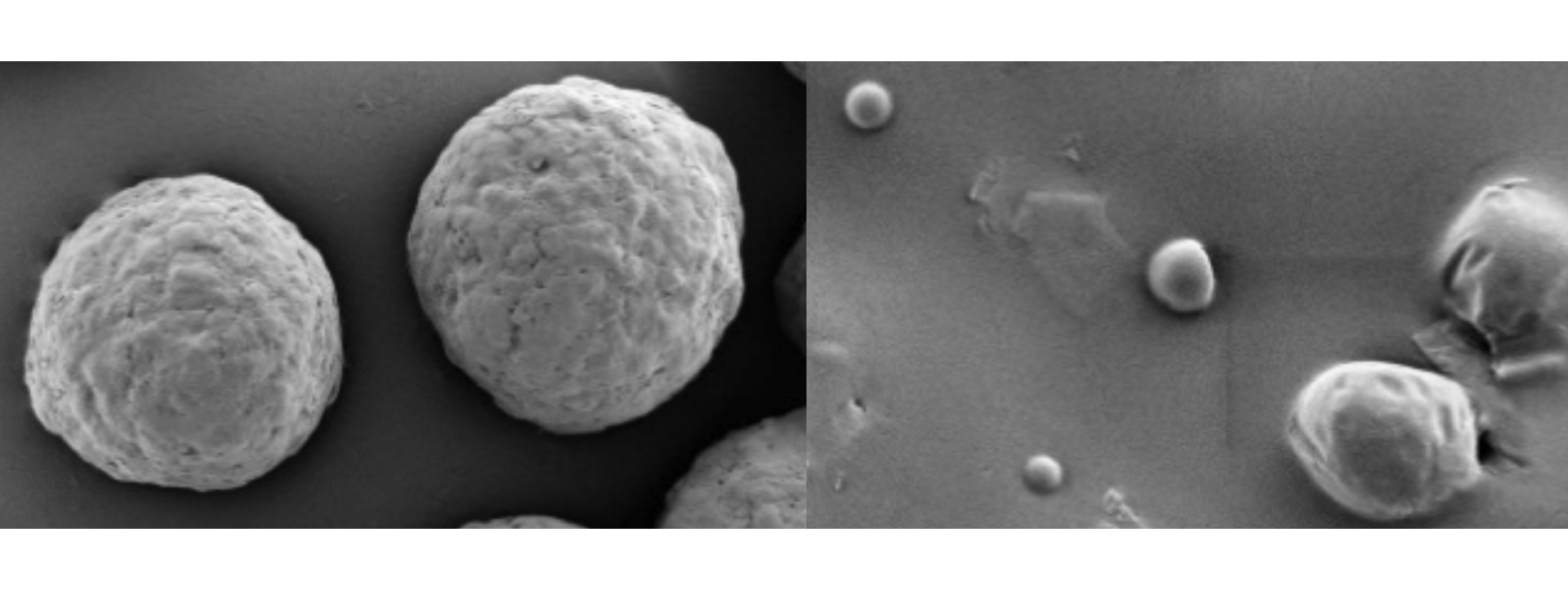
In addition, to the cushioning effect provided by the processing air, the excellent accessibility of the whole product’s surface area allowed perfect drying.
This produces coated substrates, with smooth surfaces (Figure 1), already delivering functionality at moderate coating levels (Figure 4). The mechanical impact on the substrate was higher in both drum coaters leading to the surfaces appearing slightly rougher (Figure 2, Figure 3). Functionality was achieved at similar coating levels in both coaters. Differences were merely found regarding processing time, due to differences in the available inlet air quantities.
Conclusions
Expectedly, fluid bed coating allowed the shortest possible processing time thanks to larger quantities of inlet air available. The fluidisation of the particles, inherently provides high drying capacity and mixing efficiency. Consequently, the coating formulations could be applied economically quicker and more homogeneously.
In contrast, both pan coaters offer the advantage of being a more compact installation (smaller footprint). Additionally, access to the processing area is faster and easier. Furthermore, large batch sizes can be coated in smaller sized equipment.
In the current study, side vented pan coating allowed high inlet air quantities resulting in higher spray rates compared to the solid wall one. The dedicated design of the wedge wire screen drum allows high process air volumes, consequently resulting in high spray rates and economical short process times; similar to conventional perforated drum coaters. Compared to the fluid bed processor, this technology provides two main advantages: firstly, it comes with a much smaller footprint, and secondly, the spray guns are readily accessible during the process. Additionally, drum coating processes can easier be controlled simplifying up-scaling procedures.
Solid wall coating generally allows a vast variety of different processes (e.g. tablet coating, powder layering). In order to gain this flexibility, one needs to sacrifice on the amount of inlet air that can be utilised. As a result, processing times were slightly longer but offer the advantage of gaining a higher coating uniformity.


References
[1] Kolter K., Guth F., Angel M., Physicochemical characteristics of a new aqueous polymer, “AAPS Annual Meeting and Exposition”, New Orleans (LA), U.S.A., November 14-18, 2010.
[2] Agnese T., Cech T., Guth F., Developing a photometric method to determine the amount of film-coating material applied onto individual tablet cores, “3rd PharmSciFair”, Prague, Czech Republic, June 13-17, 2011.
[3] Agnese T., Cech T., Cembali F., Funaro C., Geiselhart V., Mondelli G., Evaluating different methods to determine the amount of applied coating material onto a tablet, “3rd PharmSciFair”, Prague, Czech Republic, June 13-17, 2011.
[4] Agnese T., Cech T., Cembali F., Funaro C., Mistry M., Mondelli G., Determining the minimum amount of functional coat to be applied to gain taste masking functionality and investigating whether shape or scale is influencing the results, “3rd PharmSciFair”, Prague, Czech Republic, June 13-17, 2011.
13 min
Brands: IMA Active, IMA S.p.A. – Active Division
5 min
Brands: IMA Active, IMA S.p.A. – Active Division, IMA S.p.A. – Automation Division Bologna
White paper
Effervescent tablet processing and packaging: why integrated lines are shaping the future.
6 min
Brands: IMA S.p.A. – Active Division, IMA Active
6 min
Brands: IMA Active, IMA S.p.A. – Active Division
11 min
Brands: IMA Active, IMA S.p.A. – Active Division
White paper
ARCA: AI Root Cause Analysis.
8 min
Brands: IMA Active, IMA S.p.A. – Active Division
5 min
Brands: IMA Active, IMA S.p.A. – Active Division
Case study
AMIX Nutrition and IMA Active: technological evolution supporting next generation sports nutrition.
5 min
Brands: IMA Active, IMA S.p.A. – Active Division
6 min
Brands: IMA Active, IMA S.p.A. – Active Division
9 min
Brands: IMA Active, IMA S.p.A. – Active Division
13 min
Brands: IMA S.p.A. – Active Division, IMA Active
White paper
Sustainability benefits of Near-Infrared (NIR) integrated powder blending in pharmaceutical manufacturing.
7 min
Brands: IMA Active, IMA S.p.A. – Active Division
5 min
Brands: IMA S.p.A. – Active Division, IMA Active
7 min
Brands: IMA S.p.A. – Active Division, IMA Active
7 min
Brands: IMA Active, IMA S.p.A. – Active Division
6 min
Brands: IMA S.p.A. – Active Division, IMA Active
12 min
Brands: IMA S.p.A. – Active Division
11 min
Brands: IMA Active, IMA S.p.A. – Active Division
8 min
Brands: IMA Active, IMA S.p.A. – Active Division
11 min
Brands: IMA Active, IMA S.p.A. – Active Division
Case study
Vitabalans Oy chooses PREXIMA.
4 min
Brands: IMA Active, IMA S.p.A. – Active Division
34 min
Brands: IMA North America Inc. – Thomas Division
16 min
Brands: IMA S.p.A. – Active Division, IMA Active
12 min
Brands: IMA S.p.A. – Active Division, IMA Active
9 min
Brands: IMA S.p.A. – Active Division, IMA Active
25 min
Brands: IMA S.p.A. – Active Division, IMA Active
20 min
Brands: IMA S.p.A. – Active Division, IMA Active
20 min
Brands: IMA S.p.A. – Active Division, IMA Active
White paper
The Energy Diary: powering sustainability.
6 min
Brands: IMA Active, IMA S.p.A. – Active Division
10 min
Brands: IMA Active, IMA S.p.A. – Active Division
4 min
Brands: IMA Active, IMA North America Inc. – Thomas Division, IMA S.p.A. – Active Division
12 min
Brands: IMA Active, IMA S.p.A. – Active Division
8 min
Brands: IMA Life, IMA S.p.A. – Life Division Bologna
8 min
Brands: IMA S.p.A. – Active Division, IMA Active
10 min
Brands: IMA S.p.A. – Active Division, IMA Active
10 min
Brands: IMA Active, IMA S.p.A. – Active Division
14 min
Brands: IMA Active, IMA S.p.A. – Active Division
9 min
Brands: IMA Life, IMA S.p.A. – Life Division Bologna
11 min
Brands: IMA S.p.A. – Active Division, IMA Active
6 min
Brands: IMA S.p.A. – Active Division, IMA Active
14 min
Brands: IMA S.p.A. – Active Division, IMA Active
15 min
Brands: IMA S.p.A. – Active Division, IMA Active
10 min
Brands: IMA S.p.A. – Active Division, IMA Active
17 min
Brands: IMA S.p.A. – Active Division, IMA Active
5 min
Brands: IMA Active, IMA S.p.A. – Active Division
12 min
Brands: IMA S.p.A. – Active Division, IMA Active
13 min
Brands: IMA Active, IMA S.p.A. – Active Division
11 min
Brands: IMA Active, IMA S.p.A. – Active Division
6 min
Brands: IMA S.p.A. – Life Division Bologna, IMA Life
White paper
The success of freeze-drying.
18 min
Brands: IMA S.p.A. – Life Division Bologna, IMA Life North America Inc.
10 min
Brands: IMA S.p.A. – Life Division Bologna
6 min
Brands: IMA Life, IMA S.p.A. – Life Division Bologna
11 min
Brands: IMA Active, IMA S.p.A. – Active Division
White paper
Influence of material and capsule filling process with Minima on aerosolization performances by DPIs.
12 min
Brands: IMA Active, IMA S.p.A. – Active Division
10 min
Brands: IMA Active, IMA S.p.A. – Active Division
6 min
Brands: IMA S.p.A. – Active Division, IMA Active
Case study
Algorithm: «Why we choose IMA».
3 min
Brands: IMA Active, IMA S.p.A. – Active Division
Case study
Tablets: the importance of uniform coating.
6 min
Brands: IMA Active, IMA S.p.A. – Active Division
White paper
IMA Life approach to No-Touch Transfer (NTT) of pre-sterilised Ready-To-Use (RTU) containers.
8 min
Brands: IMA Life, IMA S.p.A. – Life Division Bologna
42 min
Brands: IMA Life, IMA S.p.A. – Life Division Bologna
Case study
Quality by design cycle optimisation and equipment capability determination for vaccine placebo.
4 min
Brands: IMA Life, IMA S.p.A. – Life Division Bologna
4 min
Brands: IMA Life, IMA S.p.A. – Life Division Bologna
Case study
Supporting Merck toward a new age of aseptic fill-finish processing of highly potent drugs.

5 min
Brands: IMA Life, IMA S.p.A. – Life Division Bologna
White paper
IMA Active drives forward the successful uptake of Continuous Manufacturing in the pharmaceutical industry.
7 min
Brands: IMA Active, IMA S.p.A. – Active Division
White paper
An overview of design space construction.

3 min
Brands: IMA Life, IMA S.p.A. – Life Division Bologna
18 min
Brands: IMA S.p.A. – Active Division, IMA Active
18 min
Brands: IMA Active, IMA S.p.A. – Active Division
4 min
Brands: IMA Life, IMA S.p.A. – Life Division Bologna
30 min
Brands: IMA Active, IMA S.p.A. – Active Division

3 min
Brands: IMA Life, IMA S.p.A. – Life Division Bologna

12 min
Brands: IMA Life, IMA S.p.A. – Life Division Bologna
7 min
Brands: IMA S.p.A. – Active Division, IMA Active

6 min
Brands: IMA Life, IMA S.p.A. – Life Division Bologna
4 min
Brands: IMA S.p.A. – Active Division, IMA Active
Case study
Mastering tablet manufacturing: how segment tools improve productivity, efficiency and consistency.
7 min
Brands: IMA Active, IMA S.p.A. – Active Division
14 min
Brands: IMA Life, IMA S.p.A. – Life Division Bologna
34 min
Brands: IMA Active, IMA S.p.A. – Active Division

7 min
Brands: IMA Life, IMA S.p.A. – Life Division Bologna
2 min
Brands: IMA Active, IMA S.p.A. – Active Division
11 min
Brands: IMA Active, IMA S.p.A. – Active Division
5 min
Brands: IMA Life, IMA S.p.A. – Life Division Bologna
4 min
Brands: IMA Life
White paper
Comparison of minitablets and pellets as multiparticulate drug delivery systems for controlled drug release.
24 min
Brands: IMA Active, IMA S.p.A. – Active Division
Case study
Lubricant sensitivity of direct compression grades of lactose in continuous batch tableting process.
33 min
Brands: IMA Active, IMA S.p.A. – Active Division
4 min
Brands: IMA Active, IMA S.p.A. – Active Division
5 min
Brands: IMA Active, IMA S.p.A. – Active Division

7 min
Brands: IMA Life
5 min
Brands: IMA Active, IMA S.p.A. – Active Division
5 min
Brands: IMA Active, IMA S.p.A. – Active Division
9 min
Brands: IMA Active, IMA S.p.A. – Active Division
White paper
Component washing: better with less.
7 min
Brands: IMA Active, IMA S.p.A. – Active Division
Case study
IsoTech Lab-Tech Blog

15 min
Brands: IMA Life, IMA S.p.A. – Life Division Bologna
4 min
Brands: IMA Active, IMA S.p.A. – Active Division
White paper
New solutions for nutraceuticals.
5 min
Brands: IMA Active, IMA S.p.A. – Active Division
35 min
Brands: IMA Active, IMA S.p.A. – Active Division
17 min
Brands: IMA Active, IMA S.p.A. – Active Division
7 min
Brands: IMA Active, IMA S.p.A. – Active Division
4 min
Brands: IMA Life, IMA S.p.A. – Life Division Bologna
Case study
The All-In-One concept in action

6 min
8 min
Brands: IMA Active, IMA S.p.A. – Active Division
14 min
Brands: IMA Active, IMA S.p.A. – Active Division
7 min
Brands: IMA Active, IMA S.p.A. – Active Division
Case study
Food supplement revolution.
4 min
Brands: IMA Active, IMA S.p.A. – Active Division
White paper
CROMA continuous coater: saving energy and process time by using high solids coating material.
6 min
Brands: IMA Active, IMA S.p.A. – Active Division
7 min
Brands: IMA Active, IMA S.p.A. – Active Division
6 min
Brands: IMA Active, IMA S.p.A. – Active Division
Case study
Application of acrylic enteric coating directly on soft gelatine capsules using a GS coating pan.
5 min
Brands: IMA Active, IMA S.p.A. – Active Division

1 min
7 min
Brands: IMA S.p.A. – Active Division, IMA Active
5 min
Brands: IMA Active, IMA S.p.A. – Active Division
11 min
Brands: IMA Active, IMA S.p.A. – Active Division

8 min
Brands: IMA Life Japan KK, IMA Life, IMA S.p.A. – Life Division Bologna
11 min
Brands: IMA Active, IMA S.p.A. – Active Division
8 min
Brands: IMA Active, IMA S.p.A. – Active Division
6 min
Brands: IMA Active, IMA S.p.A. – Active Division

11 min
Brands: IMA Life, IMA S.p.A. – Life Division Bologna

9 min
Brands: IMA Life, IMA S.p.A. – Life Division Bologna
5 min
Brands: IMA Active, IMA S.p.A. – Active Division
White paper
Formulating tablets layer by layer.
10 min
Brands: IMA Active, IMA S.p.A. – Active Division

8 min
Brands: IMA Active, IMA S.p.A. – Active Division

11 min
Brands: IMA S.p.A. – Life Division Bologna
Case study
Formulation development of Vitamin C based effervescent blend suitable for direct compression.
8 min
Brands: IMA Active, IMA S.p.A. – Active Division
6 min
Brands: IMA Life, IMA S.p.A. – Life Division Bologna
9 min
Brands: IMA Active, IMA S.p.A. – Active Division

6 min
Brands: IMA Life, IMA S.p.A. – Life Division Bologna
7 min
Brands: IMA Active, IMA S.p.A. – Active Division
7 min
Brands: IMA Active, IMA S.p.A. – Active Division
Case study
Extrusion-Molding-Coating process advantages for Continuous Manufacturing of oral solid dosage forms
12 min
Brands: IMA Active, IMA S.p.A. – Active Division
6 min
Brands: IMA Active, IMA S.p.A. – Active Division

7 min
Brands: IMA Life
7 min
Brands: IMA Active, IMA S.p.A. – Active Division
13 min
Brands: IMA Active, IMA S.p.A. – Active Division
White paper
Autoregulation function on DOMINA tablet press.
6 min
Brands: IMA Active, IMA S.p.A. – Active Division
White paper
The potential of CROMA continuous coater.
9 min
Brands: IMA Active, IMA S.p.A. – Active Division
10 min
Brands: IMA Life, IMA S.p.A. – Life Division Bologna
Case study
Navigating the COVID pandemic using Augmented Reality to aid in Pharmaceutical Manufacturing.

11 min
Brands: IMA Life, IMA S.p.A. – Life Division Bologna
White paper
Perfima Extra: your way to boost productivity keeping process quality at the highest standard.
4 min
Brands: IMA Active, IMA S.p.A. – Active Division
Case study
IMA and OSIsoft: setting the standard in tablet press process data to accelerate production set-up.

4 min
Brands: IMA S.p.A. – Active Division, IMA Active
9 min
Brands: IMA S.p.A. – Active Division, IMA Active
10 min
Brands: IMA Active, IMA S.p.A. – Active Division
7 min
Brands: IMA Active, IMA S.p.A. – Active Division
5 min
Brands: IMA Active, IMA S.p.A. – Active Division
10 min
Brands: IMA Active, IMA S.p.A. – Active Division

4 min
Brands: IMA Safe, Highly Accurate Tablet Counter Seals Wasdell Deal for IMA Swiftpack

6 min
Brands: IMA Life, IMA S.p.A. – Life Division Bologna
Case study
Machinability of PVC-free blister packaging

1 min
Brands: IMA S.p.A. – Safe Division, IMA Safe
Case study
Power to the essential.
6 min
Brands: IMA Active, IMA S.p.A. – Active Division
6 min
Brands: IMA Active, IMA S.p.A. – Active Division
7 min
Brands: IMA Active, IMA S.p.A. – Active Division
5 min
Brands: IMA Active, IMA S.p.A. – Active Division
Case study
Much more than nutraceuticals.
6 min
Brands: IMA Active, IMA S.p.A. – Active Division
5 min
Brands: IMA Active, IMA S.p.A. – Active Division
White paper
Preliminary results of predictive maintenance algorithms on a tablet press production machine.
7 min
Brands: IMA Active, IMA S.p.A. – Active Division
White paper
The Prexima challenge. Comparison of rotary tablet presses seminar in Leverkusen (Germany).
8 min
Brands: IMA Active, IMA S.p.A. – Active Division
6 min
Brands: IMA Active, IMA S.p.A. – Active Division
Case study
Directly compressed minitablets coated in a solid wall pan for the sustained release of drugs.
6 min
Brands: IMA Active, IMA S.p.A. – Active Division
5 min
Brands: IMA Active, IMA S.p.A. – Active Division
7 min
Brands: IMA Active, IMA S.p.A. – Active Division
Case study
ARIA fluid bed granulator and MicroNIR
8 min
Brands: IMA Active, IMA S.p.A. – Active Division
Case study
CYCLOPS. Blending made by IMA.
5 min
Brands: IMA Active, IMA S.p.A. – Active Division
8 min
Brands: IMA Active, IMA S.p.A. – Active Division
7 min
Brands: IMA Active, IMA S.p.A. – Active Division
Case study
The IMA Group integrates OMAC PackML and invests in the future of machine connection and control.
8 min
Brands: IMA Active, IMA S.p.A. – Active Division
White paper
Informed Manufacturing through Big Data Analytics of Freeze Drying Process and Equipment

5 min
Brands: IMA Life, IMA S.p.A. – Life Division Bologna

5 min
Brands: IMA Life, IMA S.p.A. – Life Division Bologna

5 min
Brands: IMA Life, IMA S.p.A. – Life Division Bologna
White paper
Freeze-Drying Process Optimization.

12 min
Brands: IMA Life, IMA S.p.A. – Life Division Bologna
7 min
Brands: IMA Active, IMA S.p.A. – Active Division
White paper
Increasing vial to vial homogeneity: an analysis of KRYOSEQ® nucleation on production scale freeze dryers.

13 min
Brands: IMA Life, IMA S.p.A. – Life Division Bologna
White paper
How to perform a good scale-up.
5 min
Brands: IMA S.p.A. – Active Division, IMA Active
5 min
Brands: IMA Active, IMA S.p.A. – Active Division
27 min
Brands: IMA Active, IMA S.p.A. – Active Division
Case study
Drug layering: the impact of up-scaling.
5 min
Brands: IMA Active, IMA S.p.A. – Active Division

12 min
Brands: IMA Life, IMA S.p.A. – Life Division Bologna
5 min
Brands: IMA Active, IMA S.p.A. – Active Division
10 min
Brands: IMA Active, IMA S.p.A. – Active Division
14 min
Brands: IMA Active, IMA S.p.A. – Active Division
Case study
Scaling up a film coating process.
5 min
Brands: IMA Active, IMA S.p.A. – Active Division
White paper
Manufacturing DPIs: an engineering perspective
8 min
Brands: IMA Active, IMA S.p.A. – Active Division
White paper
Salty compression.
4 min
Brands: IMA Active, IMA S.p.A. – Active Division

4 min
Brands: IMA Active, IMA S.p.A. – Active Division
4 min
Brands: IMA Active, IMA S.p.A. – Active Division

11 min
Brands: IMA Life

7 min
Brands: IMA Life, IMA S.p.A. – Life Division Bologna

9 min
Brands: IMA Life, IMA S.p.A. – Life Division Bologna
6 min
Brands: IMA Active, IMA S.p.A. – Active Division
7 min
Brands: IMA Active, IMA S.p.A. – Active Division
Case study
Trusting the Italian One-Stop-Shop-Strategy – From 0 to 336,000 blister-per-hour capacity

6 min
Brands: IMA Safe
Case study
High Containment in OSD
7 min
Brands: IMA Active, IMA Safe, IMA S.p.A. – Safe Division, IMA S.p.A. – Active Division
Case study
Injecta. The Queen of Quality

5 min
Brands: IMA Life, IMA S.p.A. – Life Division Bologna
8 min
Brands: IMA Life, IMA S.p.A. – Life Division Bologna
White paper
FUSION™ & FUSION PLUS™

4 min
Brands: IMA Life, IMA S.p.A. – Life Division Bologna
Case study
Labelling & Serialization Integration

10 min
Brands: IMA Life
6 min
Brands: IMA Active, IMA S.p.A. – Active Division
9 min
Brands: IMA Active
Case study
Tableting at its best.
5 min
Brands: IMA Active, IMA S.p.A. – Active Division
3 min
Brands: IMA Active, IMA S.p.A. – Active Division
Case study
GlaxoSmithKline chooses PERFIMA.
5 min
Brands: IMA Active, IMA S.p.A. – Active Division
Case study
Design ad Hoc. Delpharm chose EFFECTA.
5 min
Brands: IMA Active, IMA S.p.A. – Active Division
Case study
Together again: Chinoin chooses IMA.
4 min
Brands: IMA Active, IMA S.p.A. – Active Division
4 min
Brands: IMA Active, IMA S.p.A. – Active Division
8 min
Brands: IMA Active, IMA S.p.A. – Active Division
7 min
Brands: IMA Active, IMA S.p.A. – Active Division
6 min
Brands: IMA Active, IMA S.p.A. – Active Division
7 min
Brands: IMA Active, IMA S.p.A. – Active Division
Case study
BMP: «PREXIMA fits all our needs».
4 min
Brands: IMA Active, IMA S.p.A. – Active Division
Case study
Fine Foods: «Why we choose IMA».
5 min
Brands: IMA Active, IMA S.p.A. – Active Division
5 min
Brands: IMA Active, IMA S.p.A. – Active Division
6 min
Brands: IMA Active, IMA S.p.A. – Active Division
Case study
Leading the way in micro-dosing DPIs.
6 min
Brands: IMA Active, IMA S.p.A. – Active Division