White paper
AQUARIA – enhancing drying performance while reducing consumption.
-
Reading time 5 min
-
A study by

AQUARIA stands out within the diverse range of parts washers for the pharmaceutical industry that have been developed by IMA over the last two decades. Designed to ensure maximum performance in cleaning
and validation with high efficiency, AQUARIA is renowned for its reduced consumption of energy, water, detergents and compressed air. These qualities match the pharmaceutical industry’s current attention to environmental issues and prove how IMA is actively supporting sustainability across a wide spectrum of processes, where its solutions represent a respected benchmark. AQUARIA performs according to the customer’s needs thanks to the integrated technology which allows for a high degree of washing recipe customisation. Using the machine’s intuitive HMI, parameters can be adapted to suit the specifics of each production process. Moreover, with its innovative, compact design, AQUARIA fits seamlessly into solid-dose processing lines and will meet any space requirement.
High performance, low consumption
AQUARIA implements a washing sequence designed to deliver impeccable results and, if needed, with up to three detergent dispensers featuring precise, automatic dose regulation with absolutely no waste.
Example of an operating cycle includes the following phases that can be carried out with washing fluids and airflow set at various temperatures:
• Pre-wash: removal of the main dirt from the components, surface preparation for the following stages.
• Core wash: complete elimination of residues, often using detergents and high temperatures; AQUARIA offers the closed-loop mode, which significantly reduces water consumption while maintaining the same effectiveness.
• Open-loop rinse with tap water.
• Final rinse with purified water ensures the absence of limescale.
• Drying: typically performed with filtered, heated air; AQUARIA offers AirJetStream (AJS) as an option to direct airflow onto the components, thereby significantly reducing the duration of this phase and saving energy.
• Cooling: to allow safe handling of the components.
How to make the most of AQUARIA with less energy and less time
Optimising water and airflow temperatures is one clear example of how AQUARIA contributes immediately to reducing energy consumption and accelerating the washing and drying process.
In its basic configuration, AQUARIA, as with all washers, is equipped with a fan and electric heating elements, which generate a hot airflow able to dry the washed components as well as removing droplets and moisture by setting drying temperature and time.
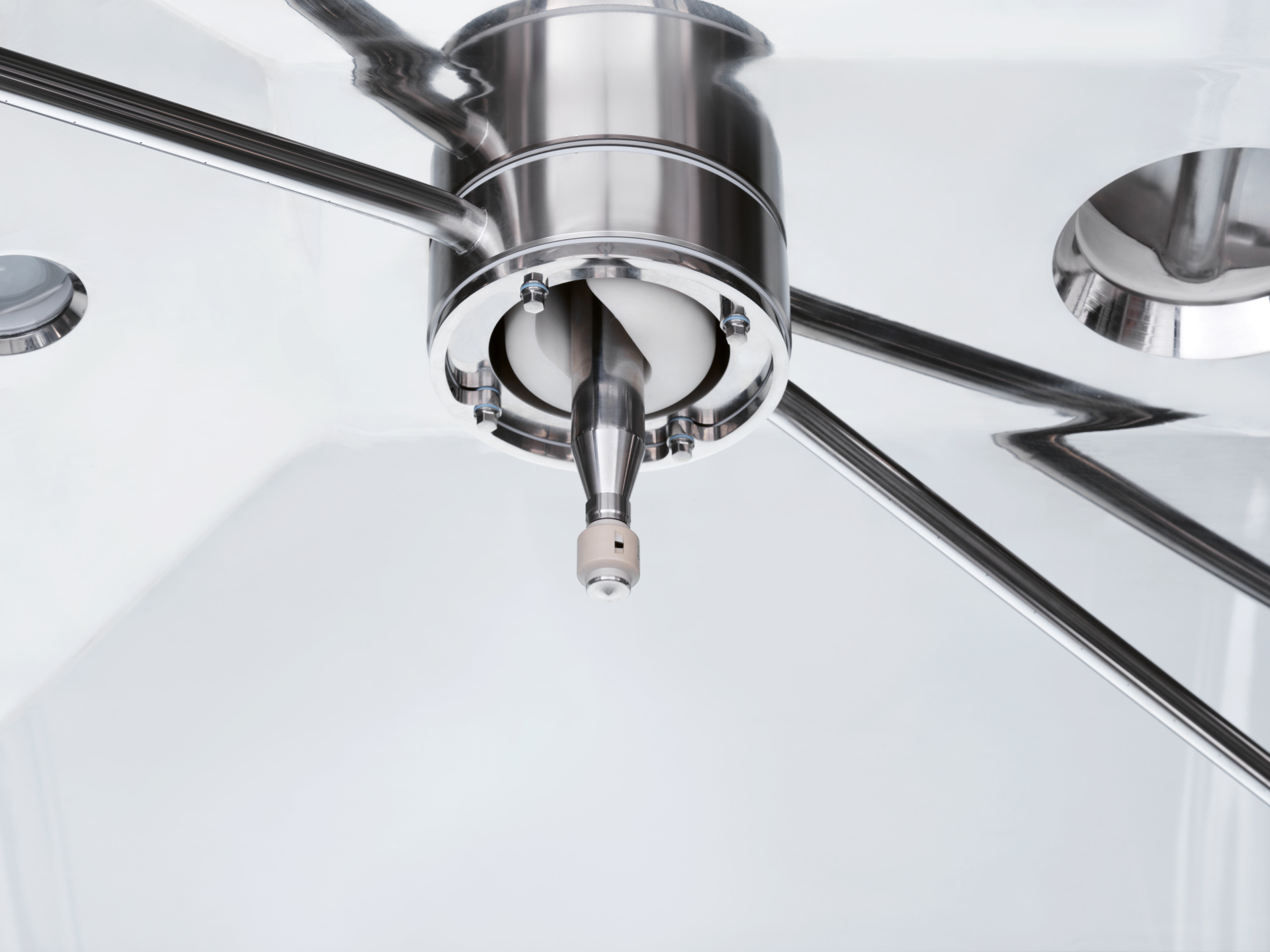
The AirJetStream (AJS) option is specifically designed to increase the efficacy of the airflow, combining either mechanical or convective effects, so that the entire surface of the components is directly invested by the airflow.
An automated system controls and directs the drying airflow across all zones of the chamber (see Figure 1).
What we call Basic Drying, without the AJS option, is just continuously filling the chamber with air coming from a dedicated hole in the chamber ceiling.
In this case study, the influence of variables was investigated: purified water temperature; airflow intended with or without the AJS option; airflow temperature.
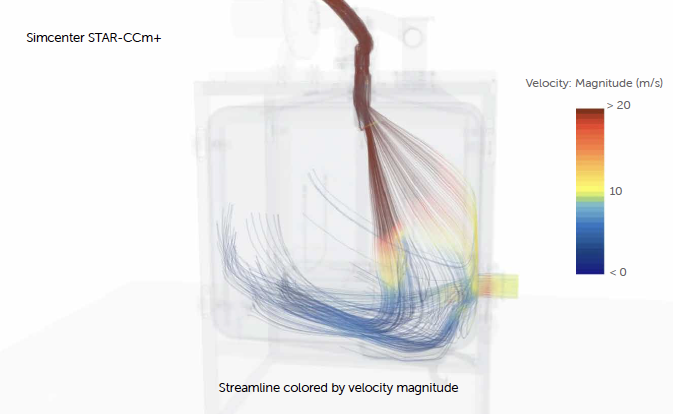
Figure 1: drying airflow.
An automated system controls and directs the drying airflow across all zones of the chamber (see Figure 1).
What we call Basic Drying, without the AJS option, is just continuously filling the chamber with air coming from a dedicated hole in the chamber ceiling.
In this case study, the influence of variables was investigated: purified water temperature; airflow intended with or without the AJS option; airflow temperature.
AQUARIA was prepared for washing the components of the PREXIMA 300 tablet press which fit into AQUARIA on a dedicated, customised rack. Four tests were carried out repeatedly several times to compare the washing and drying cycle in terms of duration and energy consumption.
The end point of the drying cycle was detected when visual inspection showed that the water drops had disappeared from the surface of the parts.
The results obtained are summarised in Table 1.
| Test | Washing cycle | Drying cycle | Average duration (min) | Average complete cycle energy consumption (%) |
| Test 1 | Water at 40°C | Basic at 40°C | 90 | 100 |
| Test 2 | Water at 40°C | with AJS at 40°C | 30 | 44 |
| Test 3 | Water at 60°C | Basic at 60°C | 15 | 61 |
| Test 4 | Water at 60°C | with AJS at 60°C | 6 | 23 |
Table 1: tests on AQUARIA for washing PREXIMA 300 components.
Conclusions
In conclusion, thanks to the design of its options and control architecture, using of the AJS (Test 1 vs Test 2), AQUARIA enables significant time and energy savings, achieving 66% time reduction and 56% energy savings compared to Test 1 using basic airflow. Since AQUARIA is equipped with electric heating elements that allow the incoming airflow temperature to be set, in combination with the AJS, it ensures much faster drying times: -93% compared to Test 1; and drastically reduced energy consumption: -77% compared to Test 1.
Considering that the drying phase is an energy-intensive operation, with such significant demonstrated savings, AQUARIA will undeniably contribute to the cost-efficiency and sustainability of the washing process.
AQUARIA
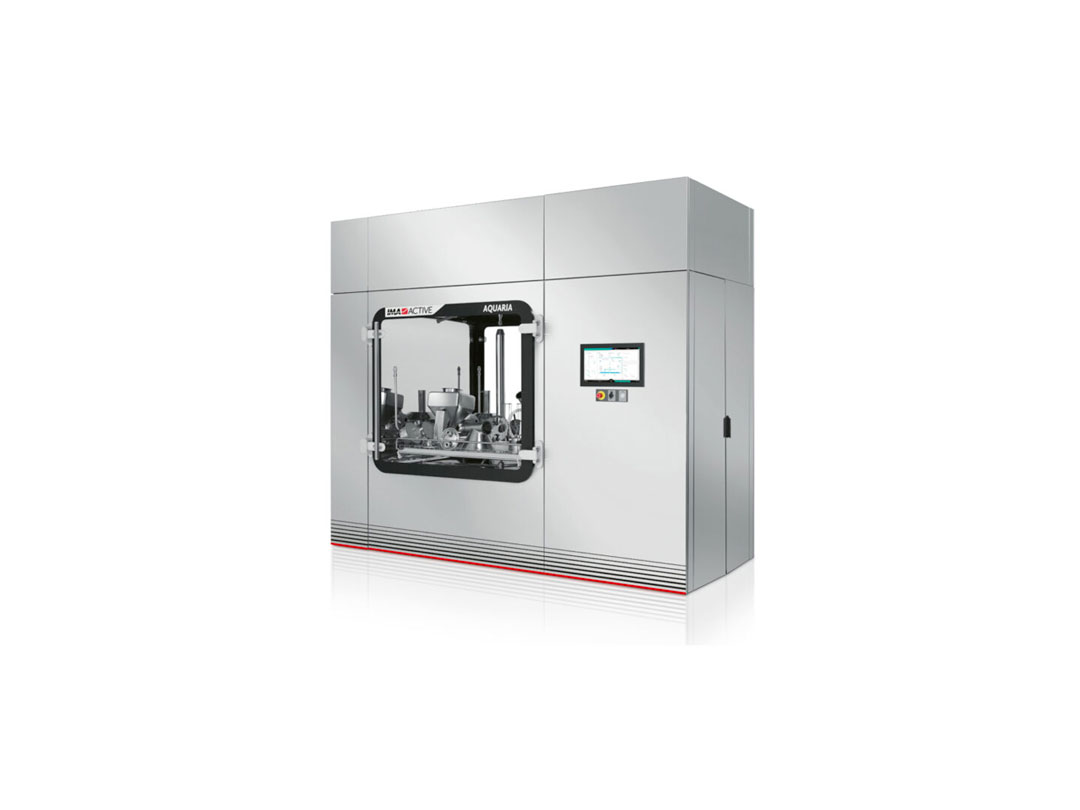
Aquaria is IMA Active’s new component washer, maximising the washing chamber volume while minimising the size of the machine. A solution for tools, components and machine parts, Aquaria redefines the meaning of flexibility and performance.
5 min
Brands: IMA Active, IMA S.p.A. – Active Division
Case study
AMIX Nutrition and IMA Active: technological evolution supporting next generation sports nutrition.
5 min
Brands: IMA Active, IMA S.p.A. – Active Division
6 min
Brands: IMA Active, IMA S.p.A. – Active Division
13 min
Brands: IMA S.p.A. – Active Division, IMA Active
White paper
Sustainability benefits of Near-Infrared (NIR) integrated powder blending in pharmaceutical manufacturing.
7 min
Brands: IMA Active, IMA S.p.A. – Active Division