White paper
Dynamicam: enhancing die filling performance with poorly flowable powders.
-
Reading time 11 min
-
A study by

Introduction
The flowability of a powder is a critical parameter in the tableting process, directly influencing both the efficiency of die filling and the quality of the final product. Powder flow can be characterised through a combination of empirical measurements and rheological analysis, including parameters such as angle of repose, flow through an orifice, compressibility index (Carr Index), and shear cell testing. These methods provide quantitative insights into how a powder behaves under gravity and mechanical stress, helping to predict its ability to move uniformly through hoppers, feed frames, and into dies. However, ensuring adequate powder flow remains a persistent challenge in solid dosage manufacturing. Many pharmaceutical powders are inherently cohesive due to their fine particle size, irregular morphology, or electrostatic behaviour. As a result, they tend to form bridges or ratholes in hoppers, show inconsistent flow through feed frames, and resist uniform die filling. This lack of flowability is not only formulation-dependent, but can also be affected by environmental factors such as humidity, as well as by process variables like hopper design, press speed and vibration.
When powder flow is inadequate, the consequences can propagate through the entire compression process. Non-uniform die filling often leads to significant tablet weight variation and poor content uniformity, compromising product quality and regulatory compliance. It may also cause mechanical defects such as capping, lamination, or hardness inconsistency. This may lead to higher rejection rates and costly rework. From a process perspective, poor flow can force manufacturers to reduce press speed, increase operator intervention, or make repeated equipment adjustments, ultimately impacting throughput, cost-efficiency and line productivity. In severe cases, persistent flow issues can limit the feasibility of scaling up a process from development to commercial production. Addressing these challenges requires a combination of formulation strategies and process optimisation. Traditional solutions, such as the addition of glidants, modification of particle size distribution, or mechanical adjustments, can provide partial improvements, but often lack robustness and may introduce variability or compatibility concerns.
Building on this context, the present white paper focuses on investigating practical process improvements designed to address the challenges associated with powders exhibiting poor flow properties. By examining real formulation scenarios characterised by low flowability, we explore how targeted process optimisation in die feeding strategies can enhance process robustness and product quality. Specifically, through a combination of optimised process settings, accurate mechanical design choices and the introduction of innovative solutions such as the Dynamicam (an IMA patent pending die loading concept), tableting a blend that has fair flowability enabled more consistent die filling and enhanced overall compression performance.
Material and methods
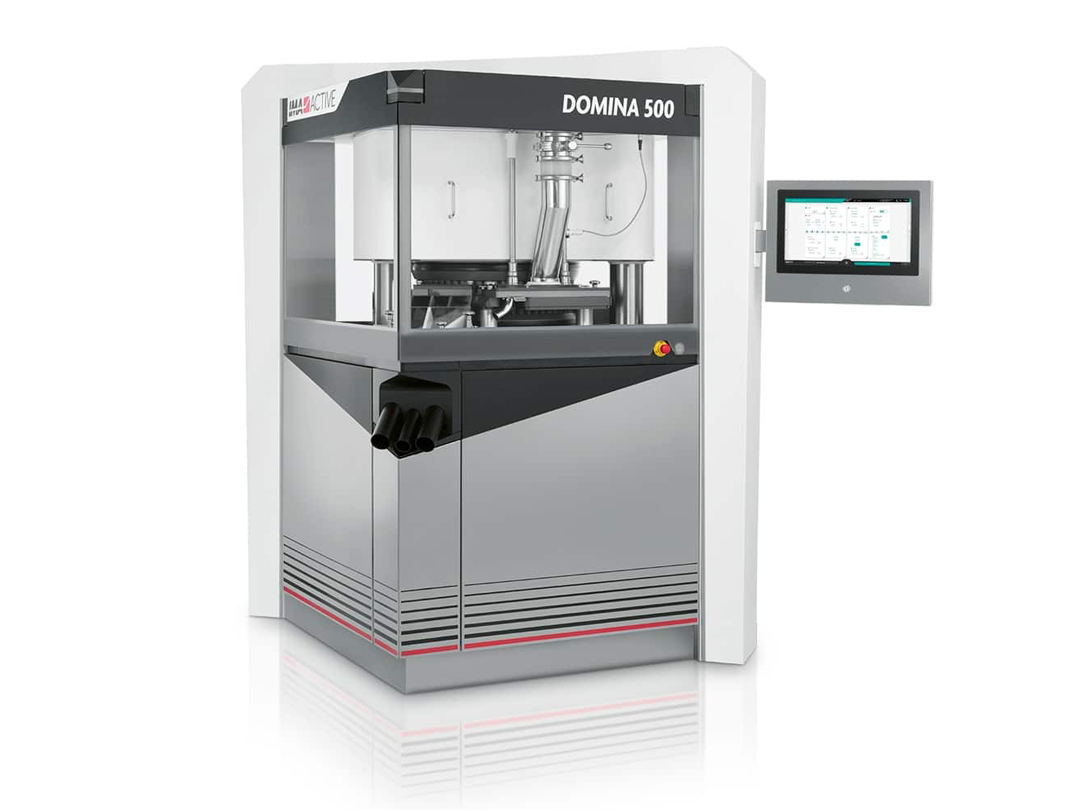
A placebo blend with fair flowability was used to simulate realistic formulation conditions in tablet manufacturing (Table 1). The inclusion of a very fine grade of lactose monohydrate decreased the overall mixture flowability, leading to a blend potentially prone to ratholing, bridging phenomena in the hopper, and inconsistent die filling. An innovative rotary tablet press (DOMINA 500, IMA, Italy) was employed, equipped with two types of punches (Euro-B and Euro-D 441) having the same tablet geometry (flat, 9 mm diameter). The target tablet weight was set at 250 mg, with the objective of achieving the lowest possible relative standard deviation (RSD) and the highest mechanical strength, allowing a direct evaluation of tablet density.
To investigate the influence of various process parameters on selected responses, a Design of Experiments (DoE) approach was adopted. A D-optimal design comprising 66 experimental runs was created to explore the optimal operating ranges (Table 2).
| Table 1: quali-quantitative composition of blend studied. | |
| Component | Percentage (%) |
| Granulac 200, Meggle | 74 |
| Tablettose 70, Meggle | 24.5 |
| Ligamed MF-2-V, Peter Greven | 1.5 |
| Table 2: levels of variables studied in DoE. | |||||
| Refilling | Type of punches | Paddles set | Pre-compression force (kN) | Main compression force (kN) | Turret sped (rpm) |
| Yes | Euro-B | 1 (round offset reduced rods – flat) | 1/3 of main compression force | 15 | 40 |
| No | Euro-D 441 | 2 (round offset – flat) | 1/2 of main compression force | 20 | 55 |
| – | – | 3 (round offset reduced rods – flat slanted) | As main compression force | 25 | 80 |
| – | – | 4 (round offset – flat slanted) | – | – | – |
Process parameter descriptions
Refilling
“Refilling” refers to maximising the gap between the loading and dosing phases. This increased gap generates a “syringe effect,” which mimics a vacuum phenomenon within the die, promoting the aspiration of a larger powder mass. Such behaviour enhances die filling uniformity and process stability, particularly for blends with poor flowability. The refilling approach was explored using Dynamicam, a smart automatic powder-loading
control system integrated into the DOMINA HMI. This system allows precise adjustment of the loading depth (0.01 mm resolution) between 2 and 22 mm, without any mechanical modification or operator intervention.
Punch type
Two punch types (Euro-B and Euro-D 441) were investigated to evaluate their influence on process consistency and the effect of dwell time on tablet quality attributes.
Paddle configuration
Four paddle configurations were tested to identify the optimal setup for minimising the tablet weight RSD. All configurations were installed in a three-paddle die feeder (with a round offset profile in the central position), designed to ensure uniform powder flow in blends with limited flowability. The third paddle, positioned above the primary paddles, maintains gentle powder movement and homogeneous feeding by continuously mixing the powder bed during operation.
The choice of paddle geometry and position is formulation-dependent: powders with fine particles and limited flowability are best processed using round-shaped rods on the left-hand position for loading and flat-geometry paddles on the right-hand position for dosing.
Compression forces
Three levels of pre-compression force ( ⅓, ½, and equal to the main compression force) were evaluated to assess the impact of air removal on the final tablet structure. Main compression forces of 15, 20, and 25 kN were selected to identify the optimal pressure conditions for maximising tablet mechanical strength.
Turret speed
Turret rotation speeds of 40, 55, and 80 rpm were tested to determine the effect of reduced die loading time under the feeder and its impact on tablet weight uniformity.
Results
The placebo blend was characterized in terms of flowability (Carr Index), loss on drying (L.O.D.), and particle size distribution (Figure 1).
The blend showed a Carr Index of 28, corresponding to a poor flowability classification. The L.O.D., measured at 105 °C, was 0.12%, indicating negligible residual moisture content.
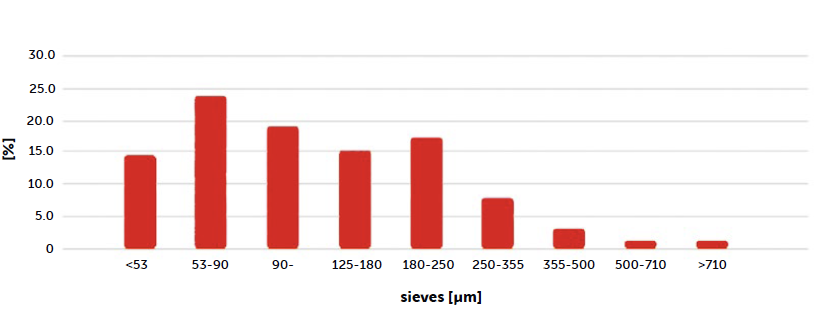
The particle size distribution revealed a heterogeneous profile, confirming the presence of both fine and coarse fractions, which may explain the observed limited flowability.
All tablets produced were characterised in terms of weight, thickness, diameter, friability and disaggregation and complied to EP standards.
Effect of process parameters on tablet weight uniformity
The first response analysed was the tablet weight relative standard deviation (RSD). According to the DoE analysis, the most significant interactions (based on p-value evaluation) were:
• Punch type – turret speed,
• Paddle configuration – compression force,
• Paddle configuration – punch type.
The interaction paddle type – punch type (Figure 2) revealed that for both Euro-B and Euro-D 441 punches, under main compression forces of 15 kN and 25 kN, the paddle configurations 1, 2, and 3 produced tablets with RSD < 1%, whereas configuration 4 yielded slightly higher variability (RSD ≈ 1.2%).
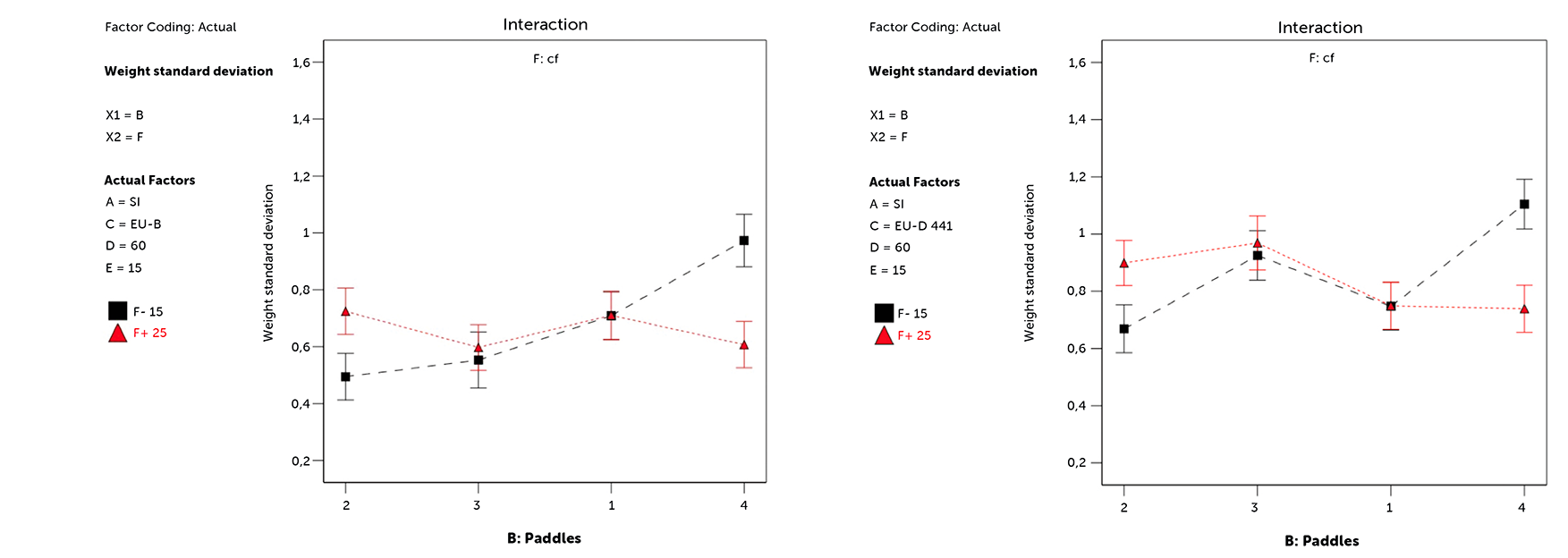
Configurations 1 and 2 demonstrated the best reproducibility and consistency across different compression forces. When averaging across the other investigated factors, configurations 1 and 2 consistently exhibited lower RSD values, confirming their robustness in maintaining uniform die filling and powder distribution (Figure 3).
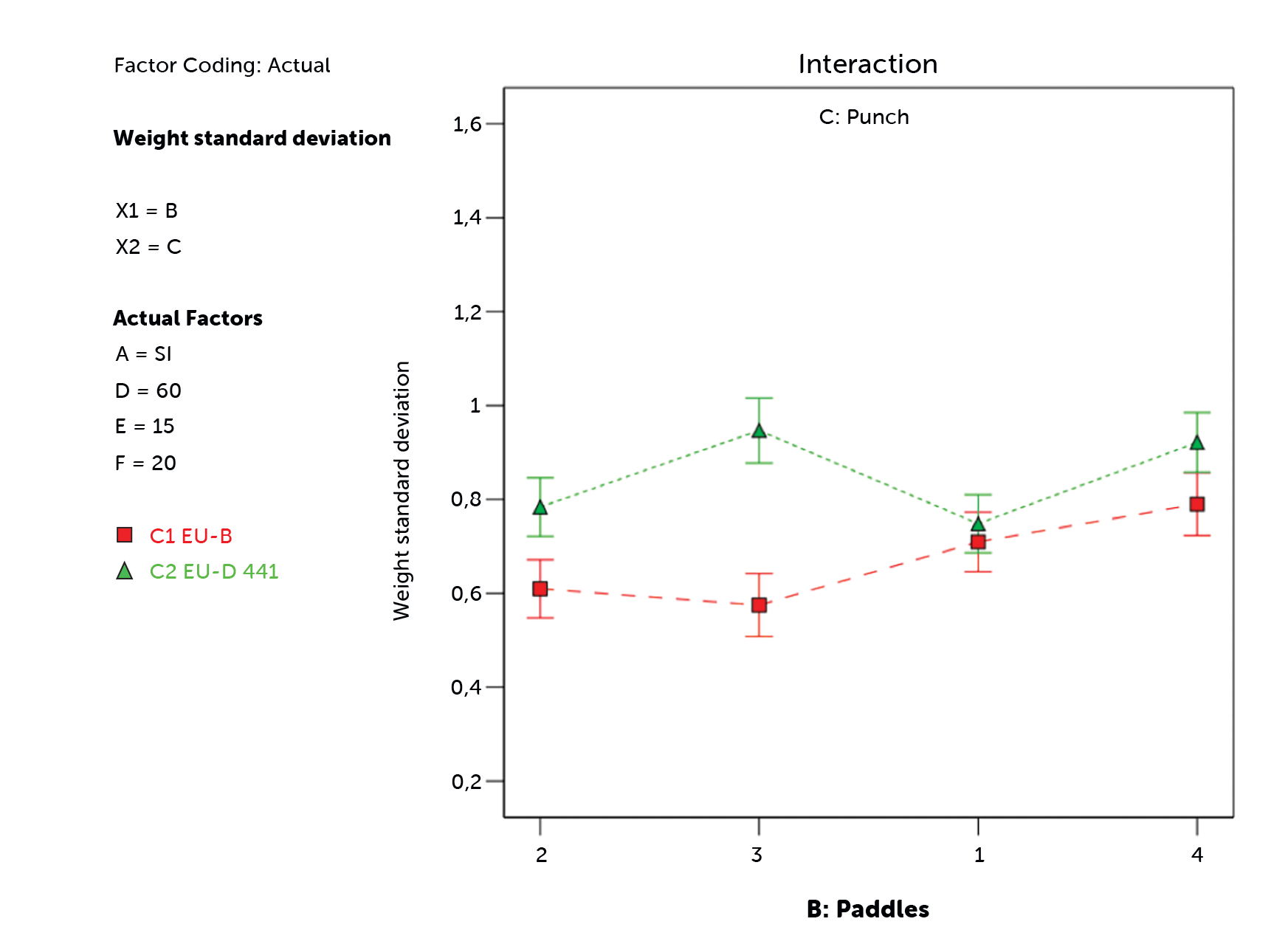
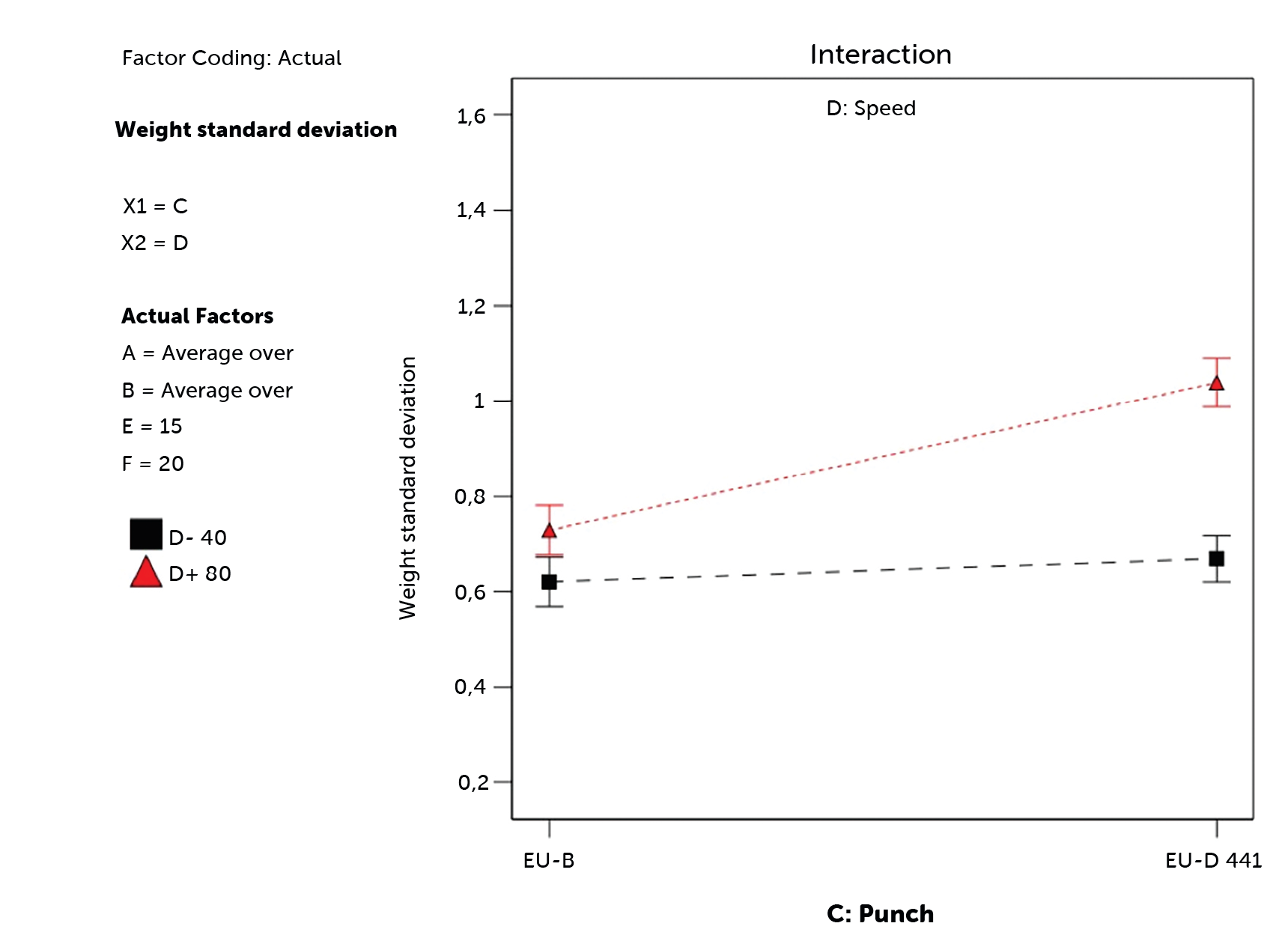
Tablet weight variability tended to increase with turret speed, particularly when rising from 40 rpm to 80 rpm, and this effect was more pronounced for Euro-D 441 punches.
Nevertheless, configurations 1 and 2 ensured stable performance even at higher throughput, maintaining RSD <1.2%. This overall stability demonstrates the robustness and reliability of the DOMINA press under the studied conditions (Figure 4).
Influence of process parameters on tablet mechanical strength
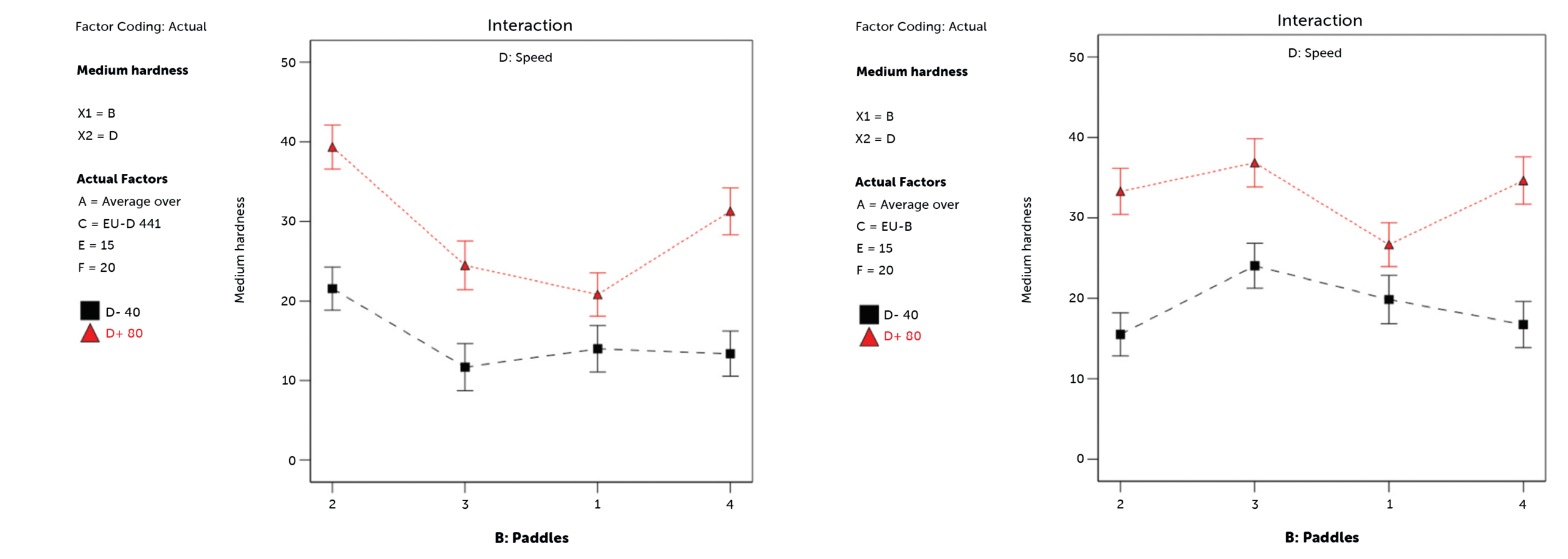
Tablet mechanical strength was strongly influenced by turret speed, pre-compression force and main compression force, as well as by paddle configuration and the paddle configuration × refilling interaction. For both punch types, tablet strength decreased with increasing turret speed (Figure 5), reflecting the shorter dwell time available for particle rearrangement and bond formation.
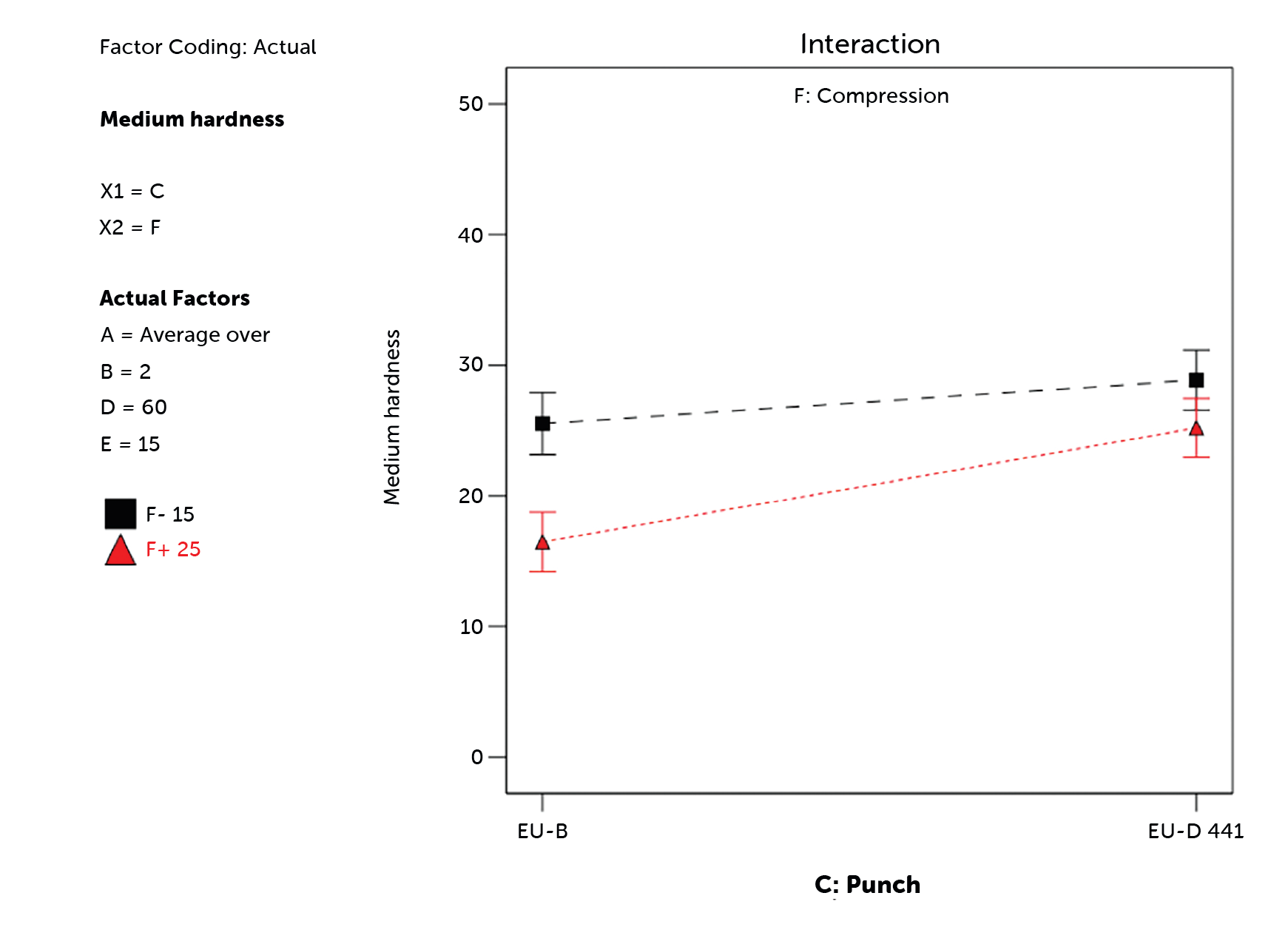
Additionally, tablet strength tended to decrease as the main compression force increased, particularly above 25 kN, suggesting the onset of a particle fracture threshold beyond which excessive force leads to structural weakening rather than further consolidation (Figure 6).
This phenomenon was more pronounced with Euro-B punches, whereas Euro-D 441 punches, having a larger flat head and longer dwell time, promoted stronger interparticle bonding and higher tablet hardness values.
The paddle configuration also played a decisive role in determining tablet density and strength.
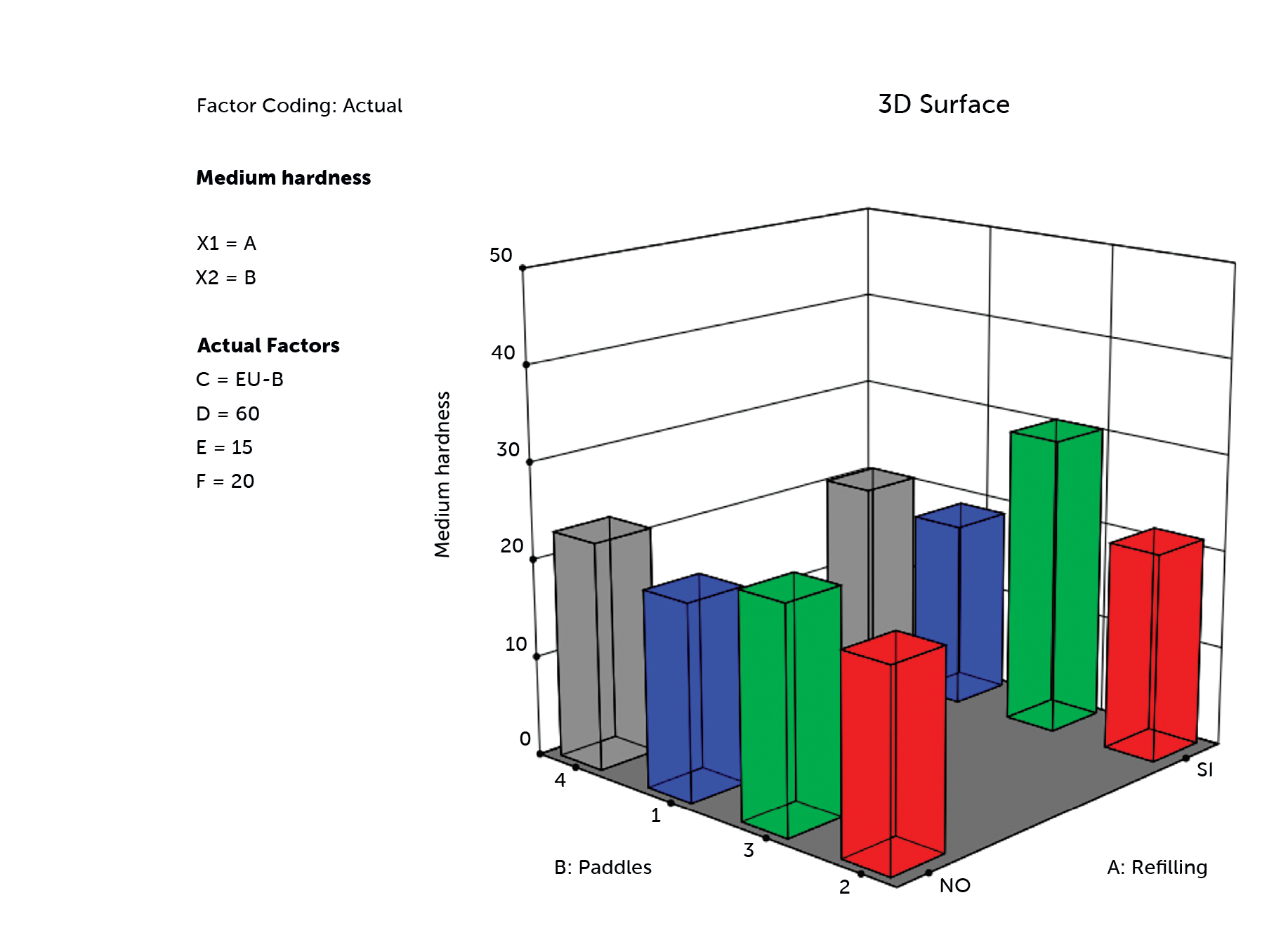
For Euro-D 441 punches, paddle configuration 2 yielded the densest and strongest tablets, attributed to optimised powder flow and improved homogeneity of the powder bed within the feeder (Figure 7).
The proper paddle geometry promoted uniform die filling, reduced voids, and favoured stronger interparticle bonding during compression. The refilling parameter further affected tablet compactness. The Dynamicam system integrated into the DOMINA HMI allowed precise adjustment of the powder loading depth (0.01 mm resolution) without mechanical modifications.
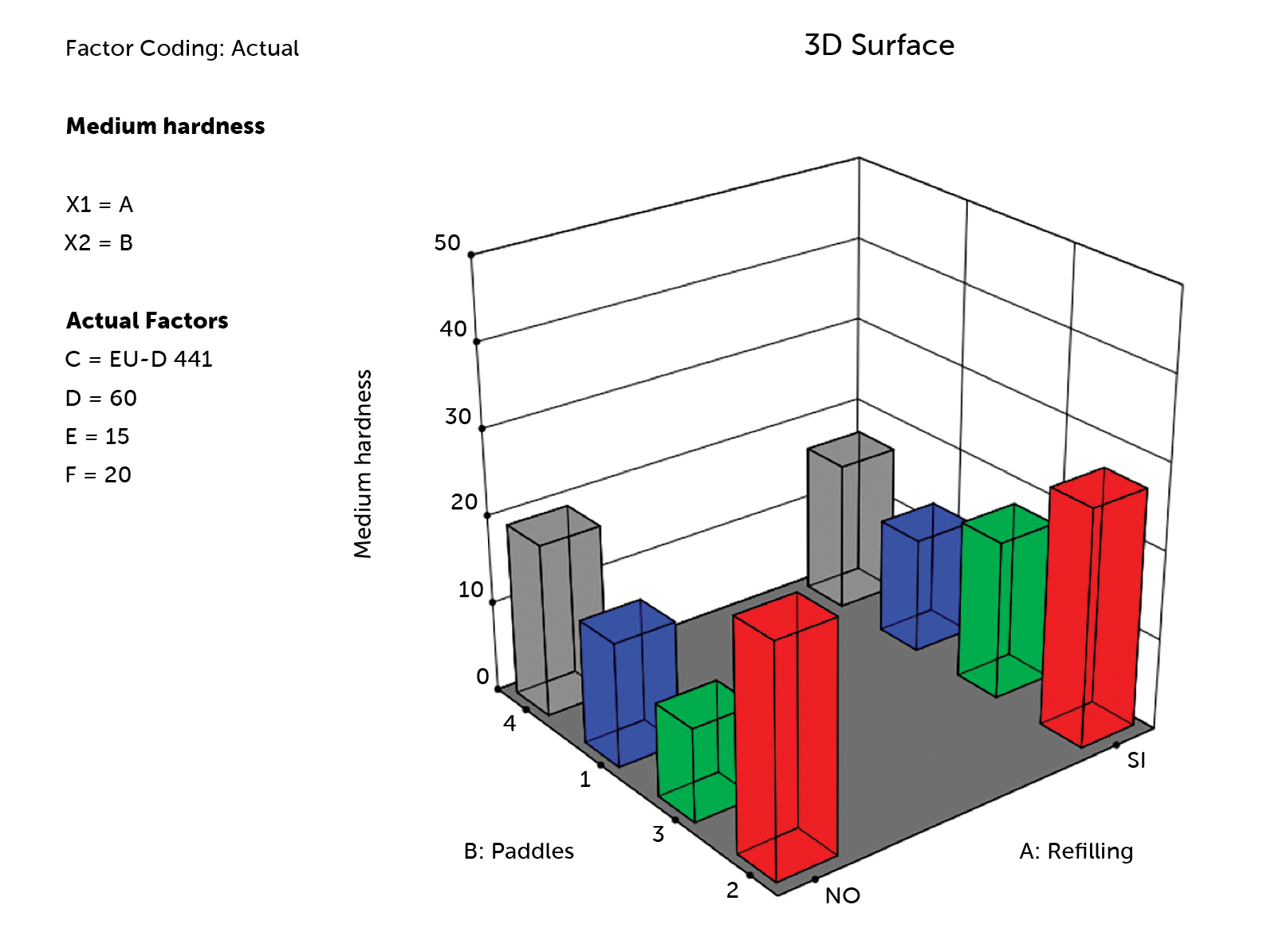
This flexibility enabled fine optimisation of the refilling step, enhancing powder packing and bonding efficiency and thereby increasing tablet density without altering tablet weight or thickness. For Euro-B punches, paddle configuration 3 combined with refilling achieved the highest tablet strength values, confirming the relevance of refilling control in improving material consolidation (Figure 8).
The results collectively indicate that the blend’s poor flowability and heterogeneous particle size distribution make the tableting process highly sensitive to feeder geometry and operational conditions. Among the investigated variables:
• Paddle configurations 1 and 2 were the most effective in achieving stable, reproducible die filling and uniform tablet weight, even at elevated turret speeds,
• The non-linear effect of compression force on tablet strength suggests an optimal range below 25 kN, beyond which particle fragmentation predominates over bonding,
• Dynamicam-based refilling control, combined with optimized paddle geometry, significantly improved powder densification and interparticle bonding, ensuring both weight consistency and mechanical robustness of the tablets.
These findings confirm the process reliability and adaptability of the DOMINA rotary tablet press for manufacturing tablets from low-flowability blends under continuous high-speed conditions.
Conclusions
This study demonstrated how the combination of process optimisation, accurate mechanical configurations, and innovative technological solutions can effectively overcome the challenges associated with compressing powders characterize by poor flowability.
Among the different variables tested, paddle type and its interaction with punch type and compression forces proved to be decisive in achieving weight relative standard deviations consistently below 1.2%, even at high turret speeds (80 rpm), confirming the stability and robustness of the process. In particular, configurations 1 and 2 ensured the most reliable die filling performance, irrespective of punch type and compression force. Tablet strength was mainly affected by turret speed, pre-compression, and main compression force, but also by paddle geometry and the use of refilling. The introduction of the Dynamicam system (patent pending) played a key role in enabling precise control of die loading without mechanical changes, directly from the DOMINA HMI.
This flexibility allowed the identification of the optimal refilling strategy for each punch–paddle configuration, significantly improving tablet density and mechanical integrity without affecting tablet weight or thickness especially for configuration 2. Overall, the integration of tailored process settings, carefully selected mechanical components, and Dynamicam-enabled refilling control allowed the DOMINA rotary tablet press to achieve high process performance and product quality, even with powders prone to ratholing and bridging.
These results confirm that targeted innovations at both the process and equipment level can provide a powerful framework to handle challenging powder behaviours, ensuring stable die filling, consistent tablet weight and excellent mechanical properties.
New
On show
Tableting
Up to 576,000 tabs/h
IMA S.p.A. – Active Division
References
Hildebrandt C., Gopireddy S.R., Fritsch A.K., Profitlich T., Scherließ R., Urbanetz N.A., Evaluation and prediction of powder flowability in pharmaceutical tableting, “Pharmaceutical Development and Technology”, 24 (1), 35–47, 2019, https://doi.org/10.1080/10837450.2018.1515050
Mendez, R., Hancock B.C., Mullarney M.P., Impact of blend properties on die filling during tableting, “International Journal of Pharmaceutics”, 536 (1), 200–209, 2018, https://doi.org/10.1016/j.ijpharm.2017.11.011
Wen H., Larsson P., Alderborn G., An experimental study of die filling of pharmaceutical powders using a rotary die filling system, “Powder Technology”, 333, 251–259, 2018, https://doi.org/10.1016/j.powtec.2018.04.031
Kumar V., Sun C.C., Understanding die fill variation during mini-tablet production, “Journal of Pharmaceutical Sciences”, 106 (11), 3241–3247, 2017, https://doi.org/10.1016/j.xphs.2017.08.018
Zhu L., Hertel T., Kleinebudde P., Flow function of pharmaceutical powders is predominantly governed by cohesion, not by friction coefficients, “Journal of Pharmaceutical Sciences”, 106 (9), 2252–2258, 2017, https://doi.org/10.1016/j.xphs.2017.04.055
Yadav V.B., Bansal A.K., The effect of dry granulation on flow behaviour of pharmaceutical powders during die filling, “Powder Technology”, 337, 78–83, 2018, https://doi.org/10.1016/j.powtec.2018.06.011
Jones-Salkey O., Chu Z., Ingram A., Windows-Yule C.R.K., Reviewing the impact of powder cohesion on continuous direct compression (CDC) performance, “Pharmaceutics”, 15 (7), 1587, 2023, https://doi.org/10.3390/pharmaceutics15071587
Giatti F., How to improve dies loading when using poor flowable powders., https://ima.it/pharma/paper/how-to-improve-dies-loading-when-using-poor-flowable-powders/
White paper
Effervescent tablet processing and packaging: why integrated lines are shaping the future.
6 min
Brands: IMA S.p.A. – Active Division, IMA Active
6 min
Brands: IMA Active, IMA S.p.A. – Active Division
White paper
ARCA: AI Root Cause Analysis.
8 min
Brands: IMA Active, IMA S.p.A. – Active Division
5 min
Brands: IMA Active, IMA S.p.A. – Active Division
13 min
Brands: IMA S.p.A. – Active Division, IMA Active