White paper
Inside anxiety: mechanisms, therapeutic approaches, recent trends and production methods in pharmaceutical and nutraceutical OSD manufacturing.
-
Reading time 11 min

-
A study by

-
Exclusively for
Notiziario Chimico Farmaceutico, April 2026
Introduction
Anxiety is a natural and often necessary response to stress or perceived danger, characterised by feelings of tension, worry, and physical changes such as an increased heart rate. It serves an important function in preparing individuals to respond to threats, a reaction commonly known as the “fight-or-flight” response. Normal anxiety is an appropriate and temporary reaction to a stressful situation. For instance, feeling anxious before a major exam or job interview is common and can even be beneficial in motivating individuals to perform well. Pathological anxiety is when anxiety becomes excessive, persistent, and interferes with daily life, and in these conditions, it is considered pathological. Anxiety disorders are a group of mental health conditions where this excessive anxiety is a central symptom.
Some of them are characterised by chronic and exaggerated worry and tension, even when there is little or nothing to provoke it. Others like social phobia, involve intense fear of social situations where one might be judged, embarrassed, or humiliated.
In the worst of cases, we can speak about real panic disorder that includes sudden and repeated episodes of intense fear accompanied by physical symptoms such as chest pain, heart palpitations, dizziness, or abdominal distress.
There are also specific phobias that provoke intense fear of specific objects or situations, such as heights, flying, or certain animals, which are disproportionate to the actual danger.
More specific diseases include obsessive-compulsive disorder, characterised by unwanted and intrusive thoughts (obsessions) and repetitive behaviours or mental acts (compulsions) aimed at reducing anxiety and post-traumatic stress disorder which occurs after exposure to a traumatic event and includes symptoms such as flashbacks, severe anxiety, and uncontrollable thoughts about that event.
So, we can say that anxiety is a really difficult condition to fight, especially in modern times where we are all subjected to many different inputs and sources of stress. Symptoms of anxiety can be emotional like fear, but even physical as with an increased heart rate, sweating, dizziness, shortness of breath, gastrointestinal issues, and muscle tension.
Anxiety can also lead to difficulty concentrating, irritability, restlessness, and feeling on edge. A combination of genetic, environmental, psychological, and developmental factors can contribute to create fertile soil for anxiety, but common risk factors also include genetics such as a family history of anxiety disorders, brain chemistry leading to imbalance in neurotransmitters. Environmental stress combined with personality for individuals that are more prone to anxiety can also be an issue such as health conditions (illnesses, substance abuse, or other mental health disorders).
Understanding anxiety involves recognising the balance between its role as a normal response to stress and its potential to develop into a disorder that significantly impacts a person’s quality of life.
Neurotransmitters like serotonin, norepinephrine, and gamma-aminobutyric acid play a crucial role in anxiety and some brain regions such as the amygdala, hippocampus, and prefrontal cortex in the anxiety response are deeply involved.
Pharmacological treatments include many different options such as:
• Selective serotonin reuptake inhibitors
• Serotonin-norepinephrine reuptake inhibitors
• Benzodiazepines
Recent trends in treatment may also include different approaches as the use of virtual reality (VR) for exposure therapy, personalised medicine, and genetic testing to tailor treatments for individual patients, sometimes associated with complementary therapies as herbal supplements like kava and valerian root, well tolerated for their effectiveness and safety. Some patients benefit from acupuncture, yoga/relaxation, and other holistic practices together with lifestyle changes for optimal treatment outcomes.
Oral solid dosage forms for anxiety treatment
When treating anxiety, the choice between oral solid dosage forms (such as tablets and capsules) and liquid dosage forms can impact factors like efficacy, patient compliance, and convenience. While solid dosage forms offer many advantages, it’s important to consider individual patient needs. Some patients, such as children or those with difficulty swallowing, may benefit more from liquid forms. However, for the general population, the advantages of solid dosage forms often make them the preferred choice for anxiety treatment. Here are the advantages of oral solid dose forms compared to liquid doses.
| Convenience and portability | Solid dosage forms are easier to carry and store. They don’t require special containers to prevent spillage or contamination. Tablets and capsules can be taken discreetly, making it more convenient for patients who need to take their medication in public or at work. |
| Dosage accuracy | Tablets and capsules provide a fixed, precise dosage, ensuring that each dose contains the exact amount of medication prescribed. With liquids, there’s a risk of incorrect dosing due to measurement errors. Solid forms eliminate this concern. |
| Stability and shelf life | Solid forms are generally more stable than liquids, which can be prone to degradation over time due to exposure to air, light or moisture. Tablets and capsules often have a longer shelf life compared to liquid formulations, making them more suitable for long-term storage. |
| Taste and palatability | Many patients find the taste of liquid medications unpleasant, which can affect adherence. Solid forms bypass the taste buds, improving compliance or alternatively they can be coated easily. |
| Ease of administration | For many patients, swallowing a tablet or capsule is quicker and easier than measuring and swallowing a liquid dose. Solid forms are easier to incorporate into a daily routine, improving adherence to the treatment schedule. |
| Reduced risk of contamination | Solid forms are less prone to contamination compared to liquids, which can be contaminated by improper handling or exposure to external factors. Many liquid medications require refrigeration, which can be inconvenient. Solid forms typically do not have this requirement. |
| Variety and versatility | Solid dosage forms can be formulated for immediate release, sustained release, or controlled release, offering flexibility in managing the timing and duration of medication effects. Tablets and capsules can combine multiple medications into a single dose, simplifying complex regimens. |
| Patient preference | Many patients prefer tablets and capsules over liquids due to ease of use and familiarity. Taking a pill can be less disruptive to daily activities than measuring and consuming a liquid. |
| Reduced side effects | Solid dosage forms can be formulated for immediate release, sustained release, or controlled release, offering flexibility in managing the timing and duration of medication effects. Tablets and capsules can combine multiple medications into a single dose, simplifying complex regimens. |
| Manufacturing and cost | Solid dosage forms are typically less expensive to manufacture and package than liquids. |
Table 1: advantages of oral solid dose forms.
Case study: valerian coated tablets
Valerian (Valeriana officinalis) is an herb commonly used for its sedative and anxiolytic effects. It is often taken in tablet or capsule form to manage anxiety, insomnia, and other conditions. The manufacturing process for valerian tablets involves several key steps to ensure the product is safe, effective, and consistent in quality.
The concentrated valerian extract is mixed with excipients, which are inactive ingredients that aid in tablet formation. Common excipients include binders (e.g. microcrystalline cellulose), fillers (e.g. lactose), disintegrants (e.g. starch), and lubricants (e.g. magnesium stearate).
The mixture may undergo granulation, a process that converts the powder into granules to improve flowability and compressibility. This can be done through wet granulation (adding a liquid binder) or dry granulation (compacting and then milling the material).
The obtained mixture is compressed into tablets using a tablet press to form tablets of uniform size, shape, and weight. Depending on the dosage they can be small, round, and concave, weighing 120 mg or even bigger, oblong shape, 915 mg in weight.
In the first case they can be sugar-coated increasing the weight by 50%, in the second they can be film-coated increasing the weight by 4%: in both cases the coating will improve taste, cover the typically unpleasant odour and improve swallowing.
Coating can be easily performed in modern coaters being both solid and perforated. Below are two formulation examples (sugar and film coating):
| Build-up | Water, sucrose, titanium dioxide, acacia, talc, calcium carbonate |
| Smoothing | Water, sucrose |
| Colouring | Water, sucrose, E132, titanium dioxide |
| Polishing | Carnauba wax |
| Sealing | Shellac, ethanol, castor oil, talc |
Table 2: example of Valerian sugar coating formulation and process steps.
Parameters that can be taken as an indication for a positive process in a GS 300 solid wall coater (IMA, Italy) can be identified in Table 3.
Valerian film coated tablets
Valerian tablets, oblong, weighing 915 mg (including hop extracts and cellulose microcrystalline, silicon dioxide, dicalcium phosphate, stearic acid as excipients) were masked for taste and odour also using a film coating process. A ready-to-use coating made of hydroxypropyl methylcellulose, gum arabic, polydextrose, talc, indigo carmine was used to obtain a light-coloured coating able to cover the brown tablet surface: suspension was prepared at 14% as a compromise between viscosity and sprayability.
| Parameter | m.u. | Sealing | Buildup | Smoothing | Colouring | Polishing | |
| Total process time | hh:min | 00:30 | 02:00 | 01:00 | 00:45 | 00:15 | |
| Inlet air temperature | °C | 60 | 55-60 | 50-55 | 40 | 0 | |
| Inlet air flow rate | m3/h | 1,800 | 1,800 | 1,800 | 1,800 | 0 | |
| Negative pressure | mmcw | -2 | -2 | -2 | -2 | 0 | |
| Cores temperature | °C | 38-40 | 38-40 | 35-38 | 30-35 | 35 | |
| Pan speed | rpm | 4 | 6 | 8 | 9 | 9-12 | |
| Spray pressure | bar | 1.0 | 2.2 | 2.0 | 2.0 | – | |
Table 3: valerian sugar coating parameters in GS 300 solid wall coater (IMA, Italy).
Optimal process parameters for an EFFECTA 200 perforated coater (IMA, Italy) are reported in Table 4.
| Parameter | m.u. | EFFECTA 200 |
| Pan volume | L | 250 |
| Pan filling | % | 100 |
| Pan load | kg | 180 |
| Weight increase | % | 4 |
| Solvent used | – | water |
| Solid concentration | % | 14 |
| Gun type | – | Schlick ABC S35 |
| Gun number | – | 4 |
| Nozzle diameter | mm | 1.2 |
| Gun distance | – | 25 |
| Atomisation pressure | bar | 2.8 |
| Pattern pressure | bar | 2.4 |
| Pan speed | rpm | 8 |
| Inlet air flow rate | m3/h | 3,800 |
| Inlet air temperature | °C | 60-62 |
| Target cores temperature | °C | 43-45 |
| Spray rate | g/min | 500 |
| Total suspension to be sprayed | g | 51,400 |
| Spray time | min | 100 |
Table 4: parameter ranges for coating processes with coloured ready-to-use formulation.
Conclusions
Anxiety remains a multifaceted and pervasive mental health challenge that significantly impacts millions of lives globally.
Current therapeutic approaches, offer diverse pathways for managing anxiety. The development of pharmaceutical and nutraceutical OSD, driven by advancements in biotechnology and a deeper understanding of anxiety’s pathophysiology, continues to evolve, offering hope for more targeted and efficient treatments. A food supplement such as valerian or other extracts commonly used as an alternative to drugs, have been widely recognised for their potential benefits in managing anxiety and promoting relaxation.
Furthermore, the production methods in the pharmaceutical and nutraceutical OSD industry are undergoing significant change. The integration of novel drug delivery systems, sustainable manufacturing practices, and the potential of biopharmaceuticals are setting new standards in the production of anxiety medications, promising enhanced efficacy and reduced side effects.
By fostering collaboration and innovation, we can aspire to develop more effective treatments and ultimately improve the quality of life for those affected by anxiety. The journey ahead is challenging, yet filled with potential, as we strive to understand and mitigate the burdens of this pervasive condition.
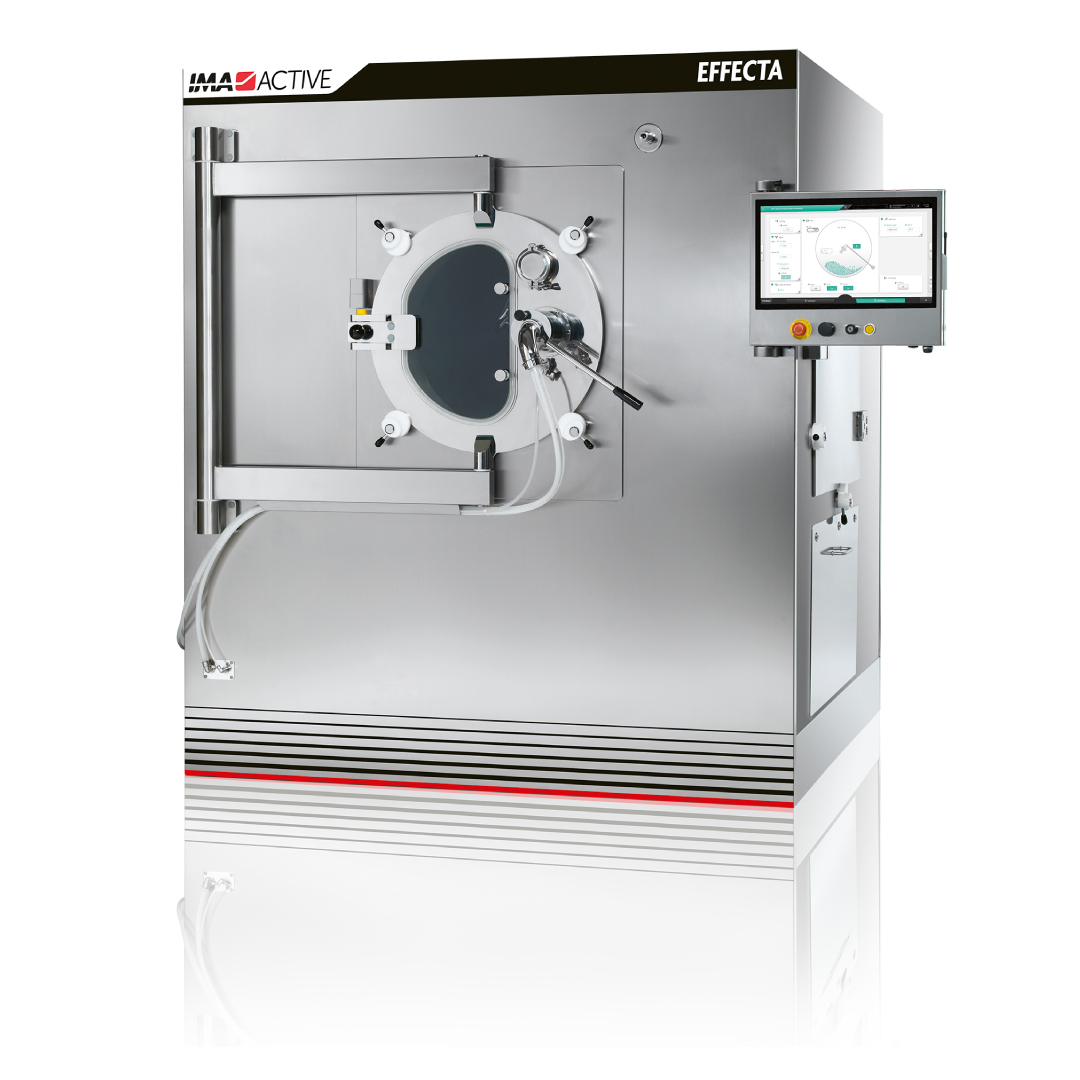
EFFECTA
Effecta is a perforated coating pan for tablet film and sugar coating. High-grade components include a functionally shaped perforated drum and specially conceived baffles for effective mixing of the cores and uniform distribution of the sprayed coating dispersion.
References
Neurobiology of Anxiety, “Journal of Neuroscience”, 2019. DOI: 10.1523/JNEUROSCI.2238-19.2019.
The Role of the Amygdala in Anxiety Disorders, “Nature Reviews Neuroscience”, 2017. DOI: 10.1038/ nrn.2017.77.
LeDoux J., Anxious: Using the Brain to Understand and Treat Fear and Anxiety, “Viking”, 2015.
Anxiety Disorders, National Institute of Mental Health, 2021. Retrieved from https://www.nimh.nih.gov/health/topics/anxiety-disorders
Anxiety Treatment Options, Mayo Clinic, 2021. Retrieved from https://www.mayoclinic.org/diseasesconditions/anxiety/treatment
Cognitive Behavioural Therapy for Anxiety Disorders: A Meta-Analysis, “Psychological Bulletin”, 2020. DOI: 10.1037/bul0000222.
Global Trends in Mental Health, World Health Organization, 2022. Retrieved from https://www.who.int/publications/global-trends-mental-health
Trends in Anxiety Treatment, Anxiety and Depression Association of America, 2023. Retrieved from https://adaa.org/understanding-anxiety/trends
Emerging Trends in Anxiety Research and Treatment, “Annual Review of Clinical Psychology”, 2022. DOI: 10.1146/annurev-clinpsy-081219-093416.
Advances in Anxiety Medication Production, Pharmaceutical Research and Manufacturers of America (PhRMA), 2023. Retrieved from https://phrma.org/advances-in-anxiety-medication.
Guidelines for the production of Anti-Anxiety Medications, U.S. Food and Drug Administration, 2023. Retrieved from https://www.fda.gov/drugs/guidelines-production-anti-anxiety-medications.
Pharmaceutical Development and Production Techniques for Anxiety Medications, “International Journal of Pharmaceutics”, 2021. DOI: 10.1016/j.ijpharm.2021.120273
4 min
Brands: IMA North America Inc. – Thomas Division, IMA Active
White paper
Effervescent tablet processing and packaging: why integrated lines are shaping the future.
6 min
Brands: IMA S.p.A. – Active Division, IMA Active
6 min
Brands: IMA Active, IMA S.p.A. – Active Division
White paper
ARCA: AI Root Cause Analysis.
8 min
Brands: IMA Active, IMA S.p.A. – Active Division
5 min
Brands: IMA Active, IMA S.p.A. – Active Division