Our Science-Based Targets Have Been Officially Validated by SBTi
- Reading time 5 min

IMA Group’s near-term science-based emissions reduction targets have been officially validated by the Science Based Targets initiative (SBTi), marking a major milestone in our decarbonisation journey and reinforcing our commitment to climate action across operations and the value chain.
This validation confirms that our near-term emissions reduction targets have been independently assessed and approved by the Science Based Targets initiative (SBTi), providing a clear and internationally recognised framework for our decarbonisation pathway.
The Science Based Targets initiative (SBTi) is the leading global framework supporting companies in setting greenhouse gas (GHG) emissions reduction targets in line with climate science. Its independent validation ensures that corporate climate targets are credible, measurable and aligned with internationally recognised standards.
“Having our science-based targets officially validated by the Science Based Targets initiative is an important milestone for IMA Group and confirms the seriousness of the path we have chosen to follow.
For us, sustainability is not a parallel initiative, but an integral part of how we think about industry, innovation and long-term development.
Reducing emissions across our operations and throughout our value chain means taking responsibility for the role that industry must play in the climate transition.
This validation reinforces our commitment to making that transition concrete, measurable and consistent over time.”
Our approved near-term targets
IMA Group’s validated targets include two absolute emissions reduction commitments to be achieved by 2030:
- a 42% reduction in Scope 1 and Scope 2 GHG emissions from a 2021 base year
- a 25% reduction in Scope 3 GHG emissions from a 2024 base year
The Scope 1 and Scope 2 target follows a 1.5°C-aligned pathway for operational emissions, while the Scope 3 target follows a well-below-2°C trajectory across the value chain, in line with SBTi criteria.
This provides a stronger and more transparent foundation for our decarbonisation pathway, ensuring that our targets are aligned with recognised scientific criteria and international standards.
A structured journey towards decarbonisation
This milestone builds on more than a decade of work to integrate sustainability into IMA’s business model.
Since 2013, the Group has progressively strengthened its environmental strategy through the publication of its first Sustainability Report, the formalisation of company-wide sustainability guidelines, the development of a structured sustainability roadmap, and the creation of OPENLab, our global network supporting packaging innovation from material understanding to industrial implementation.
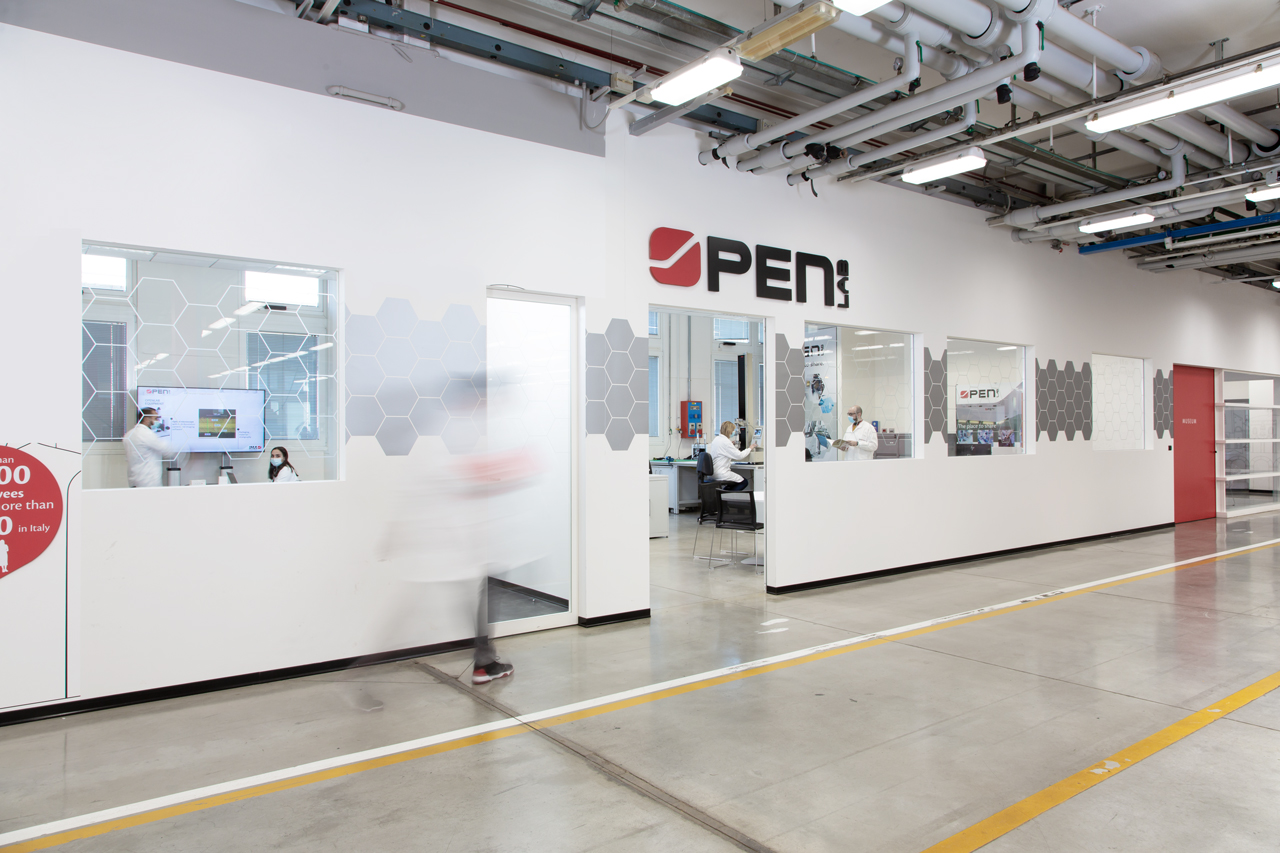
IMA has been monitoring greenhouse gas emissions for many years, progressively expanding both scope and accuracy over time. In 2021, the Group completed its first full carbon footprint assessment across Scope 1, 2 and 3 in line with the GHG Protocol, establishing the robust baseline needed to define credible reduction targets and track progress consistently over time.
Building on this foundation, IMA further strengthened action across the value chain through initiatives such as the Sustainability Program X Supplier, launched to deepen supplier engagement and improve emissions transparency across our supply chain, recognising that collaboration with suppliers is essential to drive meaningful Scope 3 reductions.
Together, these actions have built the operational and strategic foundation for our climate transition: understanding emissions, improving data quality, engaging partners and identifying the most effective levers for reduction.
Decarbonising our value chain
This achievement is fully embedded within our DEEP approach for Sustainability, where Decarbonising Our Value Chain represents one of the core areas of action.
While operational emissions remain a priority, the largest share of IMA Group’s carbon footprint lies in Scope 3 emissions, particularly in purchased goods and services and in the use phase of sold products.
This makes decarbonisation a broader industrial challenge that requires action across design, sourcing, production, supplier engagement and customer collaboration.
From energy efficiency projects and renewable electricity sourcing across our facilities, to the development of lower-energy machines, eco-design principles and material innovation through OPENLab, our approach focuses on making sustainability work at industrial scale.
Looking ahead
The validation of our science-based targets is not a finish line, but a stronger starting point.
It provides a clear, measurable and internationally recognised direction for the years ahead, helping us accelerate progress towards 2030 and further integrate climate responsibility into our technologies, operations and partnerships.
Because real progress happens when sustainability works at industrial scale.
For additional details, please refer to the IMA factsheet available on the SBTi Target Dashboard, by searching for “IMA S.p.A. (Group)” in the company search section.

Event
Event
Event