Interlocking for Material Efficiency in Pharma
- Reading time 4 min

At process level, sustainability takes form through engineering solutions that directly impact how resources are used and optimised in production. The following business cases illustrate how IMA technologies enable more efficient and resource-conscious processes across different applications.
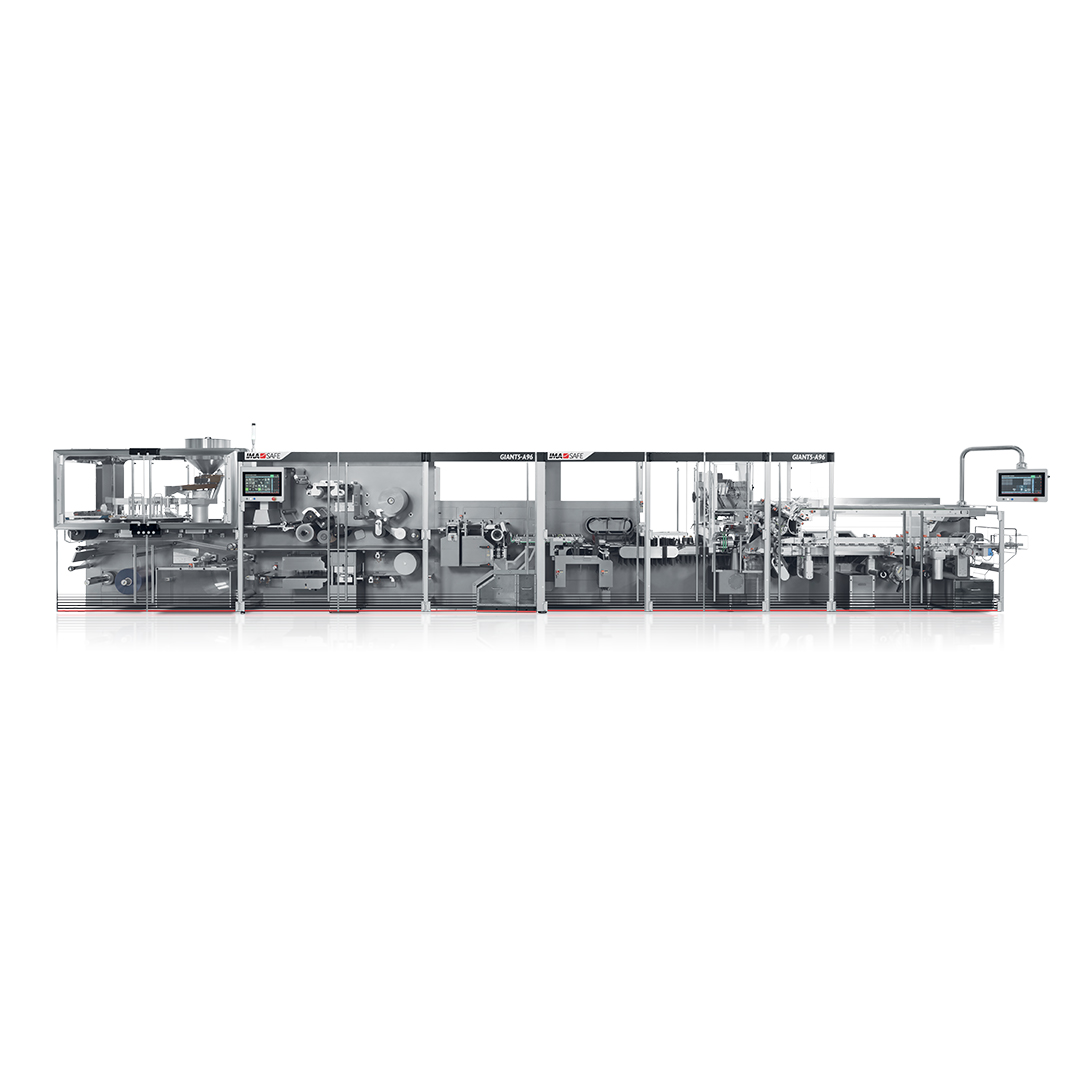
In response to growing demand to reduce resource use and support decarbonisation, IMA has developed interlocking solutions for its blister packaging technologies. While interlocking is not a new concept, its integration into IMA industrial speed machines represents a significant step forward for IMA customers, enabling a reduction in packaging material use without compromising production performance.
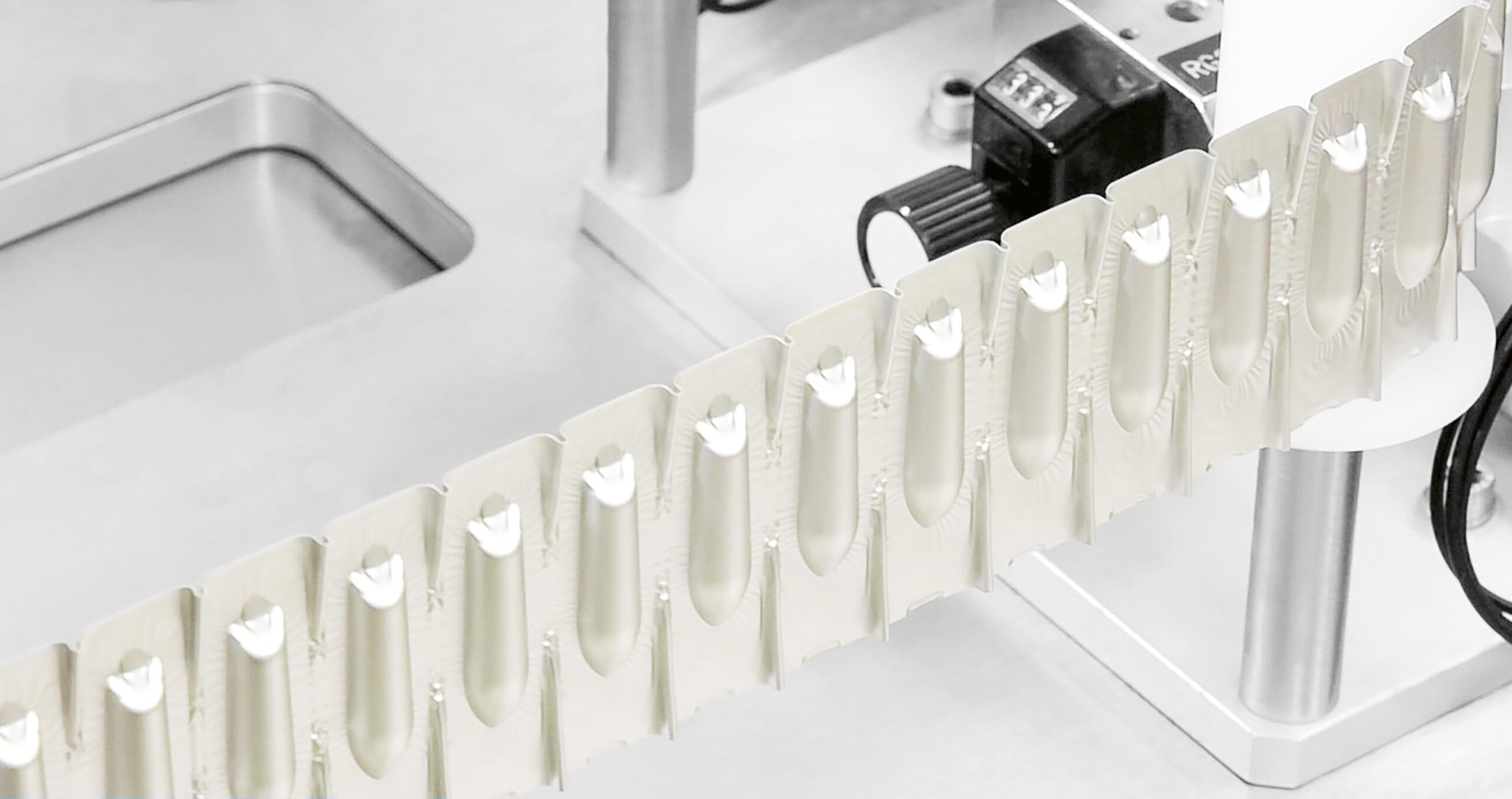
In 2026, IMA introduces a new standard connection between the GIANT1 blister machine and the cartoning system, designed to integrate a blister overturning module directly within the production line. This solution enhances production flexibility, allowing operators to activate or bypass the interlocking function depending on product and packaging requirements, without impacting overall line performance. This flexibility enables manufacturers to adapt packaging configurations while maintaining efficiency, supporting a more resource conscious approach to blister production. Within this configuration, interlocking enables blisters to be mechanically nested, reducing their stacking height inside the carton.
This allows either a reduction in carton size for the same number of blisters or an increase in the number of blisters per carton, improving the use of available volume and minimising the “air transport” effect. In both scenarios, the ratio between blisters and packaging material improves, enabling material savings and more efficient logistics, including optimised storage and potentially reduced transport requirements, contributing to the avoidance of CO2eq emissions for the same number of blisters packaged.
To support customers in evaluating these benefits at production level and within their decarbonisation strategies, IMA has developed a proprietary calculation model based on customer specific production data.
This tool enables, at a preliminary stage, a comparative assessment of the impact of switching from conventional configurations to interlocking solutions within the customer’s own production context, including material use, energy use, water use, transport requirements and the associated CO2eq emissions across these elements.
The model covers selected life cycle stages related to packaging, from material sourcing to distribution, with a focus on GWP (CO2eq), excluding the manufacturing stage.
1 Under comparable conditions and excluding transport, it indicates that the interlocking configuration can lead to material savings and to CO2eqemission avoidance, with reductions approaching 50%2 for the same number of blisters packaged, without requiring any dedicated blister redesign.
By integrating advanced machine design, such as the GIANT1 connection enabling interlocking, with material expertise and technical support for the transition to PVC free solutions, IMA enables a more sustainable approach to blister production, supporting customers in addressing sustainability related challenges within their production processes and contributing to decarbonisation while enabling more informed industrial decision-making.
1 The assessment covers selected life cycle stages related to packaging, from material sourcing to distribution, with the manufacturing stage excluded, as variations in machine energy consumption during production are considered not material for the purpose of this analysis.
The methodology adopted is the GHG Protocol (Greenhouse Gas Protocol), applied to the scope described above. Values are estimated using standard emission factors and defined assumptions based on customer inputs. Results are indicative, for comparative purposes only, and do not constitute certified carbon footprint data.
2 This avoidance is based on the use of a standard blister integrated into an interlocking configuration compared to a standard configuration and does not include any design modifications to the blister.
Event
Event
IMA Life at 20th Workshop on Targetry and Target Chemistry (WTTC20) • 23-27 August 2026
From to • Nara, Japan
Event
PHARMACONEX 2026
From to • Cairo, Egypt
Event
Meet IMA Life at ISPE Singapore Conference & Exhibition 2026
From to • Suntec Singapore Convention & Exhibition Centre
Event